What’s Inside
- Start Small and Scale Up
- Invest in Quality Glass Containers for Longevity
- Batch Cook Versatile Protein Sources
- Embrace Lentils as an Affordable Base
- Master the Art of One-Pan Roasting
- Component Prepping for Lunch Ideas Meal Prep
- Keep Sauces and Dressings Separate
- Layer Salads Strategically in Jars
- Utilize Healthy Store-Bought Sauces
- Incorporate Global Flavors to Combat Boredom
- Prioritize Texture Variety for Lunch Ideas Meal Prep
Last Tuesday at Whole Foods, I stood in the prepared foods aisle staring at a $14 sad, wilted kale salad. I realized my lunch routine was totally broken. I’m embarrassed to admit I bought it anyway. It tasted like damp lawn clippings. I’ve spent years figuring out how to pack food for work. Most of my early attempts ended up in the office trash can. You know the feeling. You pack a beautiful container on Sunday night. By Wednesday, it’s a soggy, unidentifiable mess. I’m here to fix that. I’m sharing the exact strategies I use to keep my midday meals actually edible. I’ve learned that throwing random ingredients into a plastic tub won’t magically turn into a good meal. You need a system. Let’s look at what actually works.
1. Start Small and Scale Up

I tried this wrong for months. I’d spend four hours every Sunday making five identical chicken and rice bowls. By Thursday, I couldn’t stomach the sight of them. I’d end up ordering an $18 burrito on DoorDash and throwing away the spoiled food on Saturday morning. It’s a terrible cycle. Dietitians suggest starting with just two or three meals per week to build a habit. This gradual approach keeps you from feeling overwhelmed. It also cuts down on food waste. Last month, I bought a 5 oz tub of Good & Gather organic spinach for $3.29 at Target. I planned to make salads for the whole week. I only prepped three days’ worth. The rest of the spinach stayed perfectly crisp in the crisper drawer for weekend smoothies. If you try to do everything at once, you’re going to burn out. Pick two days. Tuesday and Thursday. Prep for those days only. Once you master that, add a third day. You aren’t a machine. You don’t need a fridge full of identical plastic rectangles to be successful. Just start small. I’ve seen so many beginners quit after week one because they spent their entire Sunday chopping onions. Don’t do that to yourself. Keep your weekends relaxing. Prepping just three meals takes maybe an hour. That’s totally manageable.
2. Invest in Quality Glass Containers for Longevity

Plastic containers are the enemy of good food. Last Thursday, I pulled a plastic tub out of my fridge and the tomato sauce had permanently dyed it orange. It smelled faintly of garlic and dish soap. It’s disgusting. You need to opt for durable glass containers like Pyrex Simply Store or Glasslock. These are freezer, dishwasher, and microwave safe. Individual containers typically range from $3 to $6 at stores like TJ Maxx or Home Goods. You can usually find an 18-piece Pyrex set for around $24.99 at Target. Glass is vastly superior to plastic because it prevents staining and odor absorption. Your food actually tastes fresh. I’ve dropped a Pyrex container on my kitchen floor and it didn’t even chip. They’re incredibly tough. Plus, reheating food in plastic is a bad idea overall. When you heat glass, you don’t get that weird chemical aftertaste. I know glass is heavier to carry in your work bag. It’s worth the extra weight. I promise. If you’re currently using flimsy takeout containers from your local Chinese restaurant, throw them away right now. They aren’t meant for long-term use. Upgrade your gear. I bought my first Glasslock set five years ago and they still look brand new. The snap-on lids keep everything airtight. That means your greens stay crisp and your grains don’t dry out.
3. Batch Cook Versatile Protein Sources

Cooking a different protein for every single day is a waste of time. You need to prepare a large quantity of a neutral protein that can be repurposed. For example, I always roast about three pounds of boneless, skinless chicken breast. In March 2026, I paid exactly $4.17 per pound at Walmart for their family pack. I season it simply. Just 1 teaspoon of kosher salt, 1/2 teaspoon of black pepper, 1 teaspoon of garlic powder, and 1 teaspoon of onion powder. That’s it. Bake it at 400 degrees for 25 minutes. Once it cools, I chop it into cubes. This neutral flavor profile means I can throw it into a Mexican burrito bowl on Monday and an Asian-inspired salad on Wednesday. I made a huge mistake early on by drenching all my chicken in barbecue sauce on Sunday. By Tuesday, I was so sick of barbecue sauce I couldn’t eat it. Keep your base proteins boring. You add the flavor later with sauces and dressings. Shredded chicken also works beautifully. You can use a hand mixer to shred warm chicken breasts in about thirty seconds. It’s incredibly fast. I keep my plain chicken in one of my new glass containers. I’ve tried prepping fish in advance. Let me tell you, reheating salmon in the office microwave on a Wednesday is a fast way to make everyone hate you. Stick to chicken or turkey for communal spaces. It’s safer and holds up much better in the fridge. You might also like: 20 Inspiring Carnivore Meal Prep Ideas That Are Totally Worth It

M MCIRCO 10-Pack,30 Oz Glass Meal Prep Containers 2
If you want something that just works, M MCIRCO 10-Pack is a safe bet (23 reviews, 4.5 stars).
4. Embrace Lentils as an Affordable Base

I honestly used to hate lentils. I thought they were mushy and tasteless. I was wrong. Lentils are a budget-friendly protein and fiber source. They often cost as low as $0.98 to $1.29 per pound. I buy the 16 oz bag of Great Value Brown Lentils at Walmart for $1.29. You don’t even need to soak them. Just rinse 1 cup of dry lentils and boil them in 3 cups of water or vegetable broth. They cook in exactly 20 minutes. They create a fantastic, earthy base that you can add to salads, soups, or grain bowls. They hold their shape beautifully if you don’t overcook them. That was my biggest mistake. I used to boil them for 40 minutes until they turned into paste. Don’t do that. Set a timer. Once they’re tender but still have a slight bite, drain the excess liquid immediately. I like to toss warm lentils with 1 tablespoon of olive oil and a squeeze of fresh lemon juice. It stops them from sticking together in the fridge. Lentils are incredibly filling. If you’re trying to cut down on your grocery bill, this is the easiest swap you can make. They soak up whatever dressing you put on them. I also love mixing cooked lentils with a scoop of salsa and some taco seasoning. It makes a fantastic, cheap vegetarian taco filling that tastes amazing over a bed of crisp romaine lettuce. You won’t even miss the ground beef. You might also like: 20 Inspiring Meal Prep Ideas for Any Style
5. Master the Art of One-Pan Roasting

I hate doing dishes. Minimizing cleanup while maximizing flavor is my goal. You need to start roasting a large sheet pan of hearty vegetables every Sunday. I usually grab 2 heads of broccoli, 3 large carrots, and 2 red bell peppers from Sprouts Farmers Market. Chop them into bite-sized chunks. Toss them right on the baking sheet with 2 tablespoons of olive oil, 1 teaspoon of salt, and 1/2 teaspoon of black pepper. Roast at 425 degrees for 20 to 25 minutes. This method provides versatile components for multiple lunches. It’s an efficient use of your time. Here is a crucial warning. Avoid delicate vegetables like cucumbers and tomatoes for advanced prepping. I once prepped chopped tomatoes for four days. By Wednesday, they were a sour, fuzzy puddle in my container. It’s awful. Stick to root vegetables and cruciferous veggies like broccoli or cauliflower. They hold up perfectly in the fridge for four days. The roasted carrots get incredibly sweet and the broccoli gets those crispy, charred edges. Even cold, they taste amazing mixed into a grain bowl. Line your baking sheet with parchment paper. You won’t even have to scrub the pan afterward. I highly recommend investing in a heavy-duty aluminum baking sheet. The flimsy ones warp and pop in the oven, which sends your carefully chopped vegetables flying everywhere. A good pan ensures even browning and perfectly roasted edges every single time. You might also like: 15 Brilliant Simple Meal Prep Ideas for a Fresh New Look
6. Component Prepping for Lunch Ideas Meal Prep

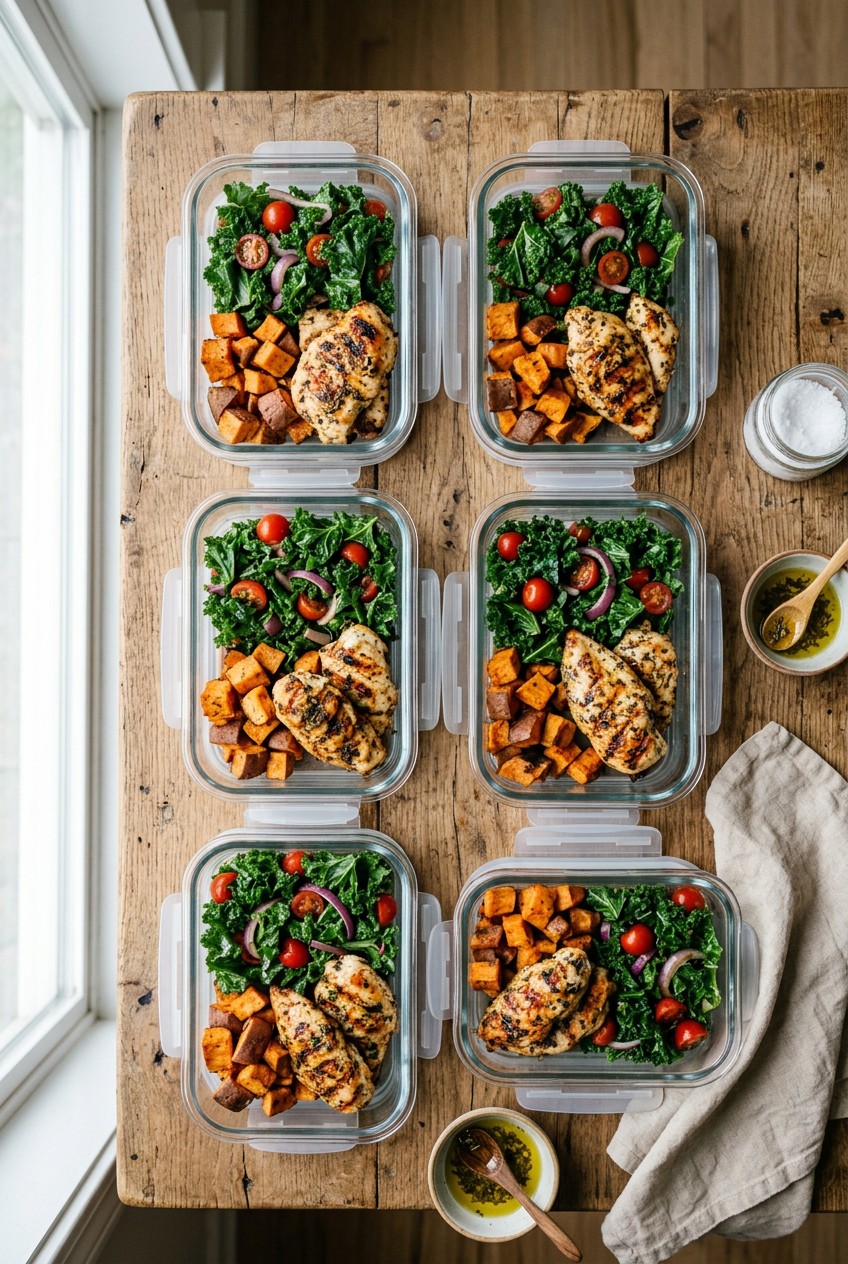
Component prepping for lunch ideas meal prep is the only way I survive the week. A key approach in 2026 is cooking your grains, proteins, and vegetables completely separately. This allows for mixing and matching throughout the week. It prevents meal fatigue. For instance, I cook 2 cups of dry quinoa on Sunday. I buy the massive 4.5 lb bag of Kirkland Signature Organic Quinoa at Costco for $10.99. Two cups of dry quinoa yields about six cups cooked. I store that plain quinoa in a large glass container. I keep my plain chicken in another container. I store my roasted vegetables in a third. On Monday morning, I scoop a little of each into my lunch container. On Tuesday, maybe I skip the chicken and add black beans to the quinoa instead. You aren’t locked into one specific flavor profile. If you assemble everything on Sunday, the flavors bleed together and the textures get ruined. Keeping the components isolated keeps everything tasting fresh. It takes five minutes to assemble your lunch in the morning. This strategy changed my routine. I no longer feel like I’m eating leftovers. I’m eating a freshly assembled bowl every single day. I keep a stack of sticky notes on my fridge to remind myself what components are available. When I open the door at 7:00 AM, I don’t have to think. I just grab one carb, one protein, and one veggie.

M MCIRCO 10-Pack,22 Oz Glass Meal Prep Containers
Honestly, M MCIRCO 10-Pack surprised me — sturdier than it looks in the photos, and over 86 buyers gave it 4.5 stars.
7. Keep Sauces and Dressings Separate

To prevent soggy meals and maintain freshness, you must always store dressings and sauces in small, separate containers. You only add them just before you eat. I learned this the hard way. Last year, I packed a beautiful spinach and strawberry salad. I poured the balsamic vinaigrette over it at 7:00 AM. By noon, the spinach had completely collapsed into a dark, slimy mess. I had to throw it away. I now use small 8-ounce Weck jars for all my liquids. You can find similar small glass jars at Target for about $4.99 a piece. They have a tight rubber seal that never leaks in my bag. Pouring the dressing on right before you take your first bite changes everything. The greens stay crisp. The croutons stay crunchy. If you don’t want to buy extra jars, just keep a full bottle of dressing in the office fridge if you own one. Just don’t put it on the food in advance. I can’t stress this enough. Moisture is the enemy of meal prep. Even a little bit of residual water from washing your lettuce will ruin a salad. Dry your greens thoroughly and keep the liquids quarantined. If you’re packing a wrap or a sandwich, put the condiments between the meat and cheese, never directly on the bread. The fat in the cheese acts as a waterproof barrier. This tiny adjustment will save your sandwich from turning to mush.
8. Layer Salads Strategically in Jars

If you really want to prep salads in advance without multiple containers, you need to use the jar method. A surprising and effective tip is to layer ingredients strategically. You start with a large 32-ounce wide-mouth mason jar. Put 2 tablespoons of your dressing at the very bottom. Next, add hardier vegetables that won’t absorb the liquid quickly. I use 1/2 cup of cherry tomatoes or chopped cucumbers. Then, add your cooked grains or beans. Next goes your protein, like 4 oz of diced chicken. Finally, pack the top half of the jar completely full of leafy greens. Sprinkle 1 tablespoon of nuts or seeds at the very top. This technique keeps the delicate greens completely isolated from the wet dressing at the bottom. When lunchtime rolls around, you just shake the jar vigorously or dump it out onto a plate. The dressing coats everything perfectly. I buy a 12-pack of Ball Mason Jars at Walmart for $14.49. They are perfect for this. Just make sure you pack the greens tightly so they don’t shift around and touch the dressing prematurely. It looks beautiful in the fridge and actually works. I tried this with a narrow-mouth jar once and I couldn’t get the food out. I was banging it on my desk for ten minutes. Always buy the wide-mouth version. It makes packing and eating so much easier.
9. Utilize Healthy Store-Bought Sauces

You don’t have to make everything from scratch. Save valuable prep time without sacrificing taste by incorporating dietitian-approved store-bought sauces. I personally swear by Primal Kitchen brand. I buy their Green Goddess dressing for $6.49 at Kroger. It’s an 8 oz bottle. Tessemae’s also provides excellent ranch and Italian options. When selecting a sauce, you need to read the nutrition label. Look for sauces with low added sugar and sodium. Ideally, you want under 360mg of sodium and under 4g of added sugar per serving. Skip the fat-free stuff. It tastes like wet cardboard. Fat is flavor and it helps keep you full. I used to spend an hour blending cashews and herbs to make homemade vegan ranch. It was exhausting. Buying a clean-ingredient bottle saves me so much mental energy. A good sauce can mask a slightly dry piece of chicken or plain quinoa. It brings the whole bowl together. Keep a bottle of high-quality hot sauce at your desk, too. A few dashes of Cholula can fix almost any bland meal. Don’t feel guilty about taking shortcuts with condiments. Just pick the ones with ingredients you can actually pronounce. I once bought a generic teriyaki sauce that had 12 grams of sugar per tablespoon. My lunch tasted like candy. Always check that label before you buy.
![[8-Pack,30 oz]Glass Meal Prep Containers](https://m.media-amazon.com/images/I/713Zfdsgi4L._AC_UL320_.jpg)
[8-Pack,30 oz]Glass Meal Prep Containers
If you want something that just works, [8-Pack is a safe bet (7 reviews, 4.5 stars).
10. Incorporate Global Flavors to Combat Boredom

You will get bored if you eat the exact same flavor profile every week. You need to combat meal prep monotony by rotating global spice blends and sauces. One week, I’ll use 1 teaspoon of cumin and 1/2 teaspoon of coriander for a Middle Eastern touch on my roasted vegetables. The next week, I’ll use 1 tablespoon of low-sodium soy sauce and 1 teaspoon of toasted sesame oil for an Asian-inspired twist. You can easily make a homemade Miso Maple Glaze. Just whisk 1 tablespoon of white miso paste with 1 teaspoon of maple syrup and a splash of warm water. It takes two minutes. Or blend up a Creamy Avocado Lime Sauce using half an avocado, the juice of one lime, and a pinch of salt. Changing the flavor profile is the easiest way to trick your brain into thinking you’re eating something entirely new. I used to just use salt and pepper on everything. By Wednesday, I was miserable. Spices are cheap. A bottle of generic curry powder is maybe $3.50 at Trader Joe’s. Use it. Dust your chickpeas with smoked paprika before roasting them. Toss your chicken in a quick Greek yogurt and dill marinade. I once tried to make a complex Thai peanut sauce from memory and accidentally used almond extract instead of sesame oil. It was a disaster. Stick to simple, proven flavor combinations.
11. Prioritize Texture Variety for Lunch Ideas Meal Prep

Boring textures ruin good lunch ideas meal prep. If everything in your bowl is soft, you’re going to hate eating it. You must ensure a deliberate mix of textures in your dishes to prevent them from feeling monotonous. I always pair my soft roasted vegetables with a crunchy topping. I buy the 8 oz bag of 365 brand sliced almonds from Whole Foods for $4.99. I toast 1/4 cup of them in a dry skillet and sprinkle them over my food right before eating. It makes a massive difference. You also need an acidic pop to cut through heavy grains. I keep a jar of homemade pickled red onions in my fridge at all times. Just slice one red onion, pour 1/2 cup of warm white vinegar and 1 teaspoon of sugar over it. They turn bright pink and add the perfect crunch and tang to any bowl. I once packed a lunch of mashed sweet potatoes, soft black beans, and shredded chicken. It felt like eating baby food. It was texturally exhausting. Now, I always include a creamy dressing to balance crisp salads, or crunchy pumpkin seeds to contrast soft quinoa. This simple step enhances the entire eating experience. It makes your prepped meals something you actually look forward to eating. Don’t put the crunchy toppings in the container on Sunday. Keep a small baggie of nuts or seeds at your desk. Otherwise, they will absorb moisture and get chewy by Tuesday.
I really hope these tips help you rethink your Sunday routine. You don’t have to eat sad, soggy food at your desk anymore. If you implement even just two or three of these strategies, your midday meals will drastically improve. I highly recommend starting with the glass containers and the component prepping method. Those two changes alone fixed my routine. If you found this helpful, please save or pin this article for your next grocery run. Let’s make this week’s meals actually taste good.
Frequently Asked Questions
How long do lunch ideas meal prep containers last in the fridge?
Most prepped meals with cooked proteins like chicken or beef will last 3 to 4 days in an airtight glass container. For the best quality and safety, practice the first-in, first-out method and always label your containers with the date you cooked them.
What is the best way to keep meal prep salads crisp?
The absolute best method is keeping your dressing in a completely separate, small container until you’re ready to eat. If you’re using mason jars, put the dressing at the very bottom, layer hard vegetables next, and pack the delicate leafy greens at the very top.
Can I use plastic containers for my lunch ideas meal prep?
I highly advise against using plastic. Plastic absorbs odors, stains easily from tomato sauces, and can leave a weird chemical taste when reheated in the microwave. Investing in durable glass containers like Pyrex or Glasslock keeps your food tasting incredibly fresh.
How do I avoid getting bored with my prepped lunches?
Try component prepping instead of building full meals in advance. Cook your grains, proteins, and vegetables separately. This allows you to mix and match different combinations each morning. You can also rotate global spice blends and healthy store-bought sauces to drastically change the flavor profile.
