What’s Inside
- Invest in Quality Glass Veggie Meal Prep Containers for Longevity and Safety
- Master the Art of Batch Cooking Grains
- Pre-Chop Hearty Vegetables Strategically (But Leave the Potatoes Alone)
- Embrace Air Fryers for Crispy Veggie Meal Prep
- Utilize Sous Vide for Nutrient Retention and Flavor Infusion
- Prioritize Cost-Effective Plant-Based Protein Sources
- Cool Foods Rapidly to Prevent Dangerous Bacterial Growth
- Freeze Smartly to Extend Shelf Life (And Avoid Mushy Veggies)
- Perfect Your Veggie Meal Prep with the 50/25/25 Rule
Last Tuesday, in the crowded Whole Foods parking lot, I dropped a flimsy, cheap plastic container of hot lentil soup right onto the dirty asphalt. That disaster forced me to rethink my veggie meal prep routine right then. Orange sludge, mushy carrots, and oil splattered all over my favorite white sneakers and the tire of my car. I stood there staring at the mess, smelling the overwhelming, heavy scent of cumin and failure. I realized I was doing everything wrong, and I was making my life so much harder than it needed to be. My storage containers were cheap and prone to cracking. My roasted vegetables were always soggy by Wednesday afternoon. My fridge constantly smelled like old garlic and damp cardboard. I’m here to fix that for you. If you’re tired of eating sad, wilted spinach salads while your coworkers order expensive takeout, you need to listen up. Let’s fix your Sunday routine once and for all. Veggie meal prep doesn’t have to mean eating bland, mushy tofu and unseasoned broccoli for five days straight. When I first started trying to eat clean, I thought I had to sacrifice all flavor and joy. I spent hours boiling vegetables until they were gray and lifeless. I ruined so many expensive groceries because I didn’t understand proper storage temperatures or how to use modern kitchen appliances. I’m going to share the exact methods, specific products, and hard-learned lessons that changed my kitchen habits. Grab your grocery list, clear off your countertops, and let’s get into the specifics of making plant-based eating actually taste incredible.
1. Invest in Quality Glass Veggie Meal Prep Containers for Longevity and Safety

I’ve bought cheap plastic before, and I’m telling you right now, it’s a massive mistake. Last year at Target, I confidently grabbed a flimsy ten-pack of plastic tubs for $5.99, thinking I was being frugal. Within a week, they permanently smelled like roasted garlic and spicy curry powder. The plastic warped in the bottom rack of my dishwasher, and a simple tomato basil sauce stained them a hideous, permanent fluorescent orange. You’re going to want to skip the plastic. Opt for durable borosilicate glass containers instead. They’re microwave, oven, freezer, and dishwasher safe. Plus, they resist stains and odors, meaning your fresh strawberries won’t taste like yesterday’s onions. I personally swear by Prep Naturals glass containers. You can get a fantastic, heavy-duty set for around $35 to $50 on Amazon. If you’re looking for something with leak-proof silicone seals that won’t fail in your tote bag, the OXO Good Grips glass containers run about $28 to $30 and are worth every penny. Pyrex Simply Store is another trusted brand I’ve used for years, with a 9-piece set costing approximately $38. For a budget-friendly option, you can sometimes find smaller Prep Naturals sets for under $25 at various online retailers. Trust me on this. If you’re serious about your Sunday routine, upgrading your storage is the first step. It makes opening your fridge a joy instead of a chore, and it keeps your food much fresher.
2. Master the Art of Batch Cooking Grains

Most people get this fundamental step wrong. They try to cook a tiny pot of rice every night after an eight-hour shift, and they inevitably give up and order pizza by Wednesday. I tried this for months before figuring it out. You need to prepare your staple grains like quinoa, brown rice, or green lentils in bulk at the start of the week. Last Sunday, I bought a massive bag of organic quinoa at Costco for exactly $10.99. I measured out 3 cups of dry quinoa, rinsed it thoroughly in a fine-mesh strainer to remove the bitter coating, and cooked it slowly with a pinch of sea salt. That 3 cups of dry grain yielded roughly 9 cups of fluffy, nutty cooked quinoa. It provides a versatile base for multiple meals throughout the week. You’re going to want to store these grains in your new airtight glass containers. They’ll easily last for up to 5 days in the fridge. I can’t stand mushy, waterlogged quinoa. You won’t either. The ultimate trick is to let the cooked grains cool on a wide metal baking sheet before you pack them. Trapped steam equals soggy, ruined grains. Once I started batch cooking my complex carbs on Sunday, my week freed up. I just scoop out what I need, warm it up, and build my bowl.
3. Pre-Chop Hearty Vegetables Strategically (But Leave the Potatoes Alone)

You can save a massive amount of time by washing, drying, and chopping dense, hearty vegetables like broccoli, cauliflower, carrots, and thick bell peppers at the start of the week. I spend about twenty focused minutes every Sunday afternoon at my kitchen island, slicing and dicing while listening to a podcast. I buy massive, crisp heads of broccoli at Sprouts for $1.49 a pound. Once chopped, I store them in my airtight glass containers. Broccoli and cauliflower florets can last 7 to 10 days in the fridge if you store them correctly. Here’s a pro tip. Always add a slightly damp paper towel to the bottom of the glass container to maintain crisp freshness. It prevents that rubbery, dry texture we all hate. However, I’ve a warning for you. Avoid pre-chopping potatoes raw. I made this mistake last Thanksgiving. I chopped five pounds of expensive russet potatoes, left them in a plastic bowl, and they turned a horrifying, oxidized gray color within a few hours. Their natural starch reacts with oxygen quickly. Keep your potatoes whole until you’re ready to cook them, or submerge them in a bowl of cold water if you absolutely must chop them a day early. Stick to prepping your cruciferous veggies and colorful bell peppers on Sunday. You might also like: 20 Lovely Work Lunch Ideas to Inspire Your Next Project

Vtopmart 5Pack 22oz Glass Storage Containers with Lids
Vtopmart 5Pack 22oz Glass Storage Containers with Lids has been one of the most consistently praised picks in this category. 32 reviewers averaged 4.5/5.
4. Embrace Air Fryers for Crispy Veggie Meal Prep

Air fryers are a requirement for quick, healthy, and delicious cooking. They offer crispy textures with less oil than traditional oven roasting. I’ve abandoned my standard electric oven for weeknight dinners. I recently picked up the Ninja Air Fryer Pro 4-in-1, which has a 5-quart capacity, at Walmart for exactly $129.99. If you’re on a tighter budget, the Instant Vortex Plus 6-Quart Air Fryer runs about $90 and works beautifully. I toss 1 to 2 pounds of mixed fresh vegetables with 1 tablespoon of high-quality avocado oil, a heavy pinch of coarse kosher salt, and freshly cracked black pepper. Skip the fat-free cooking sprays. They taste like wet cardboard and they’ll ruin the non-stick coating on your air fryer basket. Roast your prepped veggies at 375°F for 15 to 20 minutes, making sure you pull the basket out and shake it halfway through. You’ll get tender-crisp results every time. The edges of the broccoli florets get charred, crunchy, and nutty. It’s a texture you can’t replicate in a microwave or a skillet. Honestly, buying this appliance changed how I look at eating green vegetables. I actually crave roasted Brussels sprouts now because the air fryer makes them taste like a gourmet appetizer. You might also like: 20 Gorgeous Meal Planning Ideas for Any Style
5. Utilize Sous Vide for Nutrient Retention and Flavor Infusion

The sous vide method involves cooking your food in a vacuum-sealed bag submerged in a precise, temperature-controlled water bath. It’s gaining traction for vegetables, and I’m totally here for it. It retains moisture, magnifies natural flavors, and preserves nutrients much better than boiling or steaming. I used to boil my organic carrots until they were sad, mushy, and devoid of flavor. Now, I use an Anova Culinary Nano Sous Vide Precision Cooker. I bought mine online last month for $129. For tender vegetables like heirloom carrots or baby Brussels sprouts, I seal them up in a bag with a pat of vegan butter and a sprig of fresh thyme. I cook them at exactly 183°F for 12 to 15 minutes. The resulting texture is unbelievable. They come out cooked from edge to edge, with a satisfying bite left in the center. I know it sounds like a fancy restaurant technique, but it’s incredibly forgiving for home cooks. You literally can’t overcook them. If you accidentally leave them in the warm water bath for an extra ten minutes while you’re distracted by folding laundry, they won’t turn to mush. It’s foolproof. It takes the stress out of timing your side dishes. You might also like: 20 Inspiring Meal Prep Ideas for Any Style
6. Prioritize Cost-Effective Plant-Based Protein Sources

You need to proactively incorporate cost-effective and high-protein vegan options into your weekly rotation. I’m always shocked when people tell me they struggle to get enough protein on a plant-based diet. Green and brown lentils are practically free at the grocery store and offer a massive 18 grams of protein per cooked cup. Plus, they’re rich in iron and fiber. I also recommend trying seitan if you haven’t already. It provides an impressive 35 grams of protein per 4-ounce serving. I regularly grab a vacuum-sealed package of traditional seitan strips at Whole Foods for just $4.99. The chewy, dense, meaty texture is phenomenal in spicy stir-fries. Tofu is great, but seitan is superior for a satisfying chew. Black beans offer a solid 15 grams of protein per cup, and bright green edamame gives you 17 grams per cup. Last week at Trader Joe’s, I bought three bags of their frozen, pre-shelled edamame for $2.49 each. I just thaw a small handful under warm water and toss it directly into my salads. It’s an instant, zero-effort protein boost. Stop buying expensive, highly processed fake meats loaded with sodium. Stick to these whole, affordable sources. Your weekly grocery bill will shrink, and your digestion will thank you.

M MCIRCO 10-Pack,30 Oz Glass Meal Prep Containers 2
If you want something that just works, M MCIRCO 10-Pack is a safe bet (23 reviews, 4.5 stars).
7. Cool Foods Rapidly to Prevent Dangerous Bacterial Growth

This is a major public service announcement, and I need you to pay attention. A common, dangerous mistake is putting piping hot food directly into the fridge. I gave myself terrible stomach cramps last year because I didn’t understand basic food safety. I shoved a massive, boiling hot glass container of homemade minestrone soup straight into my fridge. The intense radiant heat raised the internal temperature of my fridge for hours, spoiling a new half-gallon of expensive oat milk and creating a perfect breeding ground for bacteria in the soup. You must allow your freshly cooked dishes to cool for about 30 minutes at room temperature. Then, transfer them promptly to the refrigerator within 2 hours to stay within safety guidelines. For large batches of chili or trays of roasted vegetables, divide them into smaller, shallow containers to speed up the cooling process. A deep tub of hot food will stay dangerously warm in the center for hours, even sitting in a cold fridge. I’m strict about this rule now. Set a loud timer on your phone if you’re prone to forgetting things on the counter. Don’t risk your health over a rushed Sunday evening.
8. Freeze Smartly to Extend Shelf Life (And Avoid Mushy Veggies)

Cooked vegetables generally last 3 to 5 days in the fridge, but they can be frozen for 8 to 12 months if you do it correctly. Hearty root vegetables like carrots, sweet potatoes, and beets freeze exceptionally well, whether fresh or cooked. I regularly buy massive bags of sweet potatoes at Kroger, roast them in tiny cubes, and freeze half the batch for later. For delicate, water-heavy vegetables like summer zucchini or fresh baby spinach, you must blanch them first before freezing. Dropping them in boiling water for sixty seconds stops the natural enzyme activity that causes them to turn mushy and brown. I’ve ruined so much expensive, farm-fresh zucchini by tossing it raw into a plastic freezer bag. To freeze liquids, stews, and sauces, I can’t recommend Souper Cubes enough. They’re heavy-duty, premium silicone trays designed for freezing perfect individual portions. They cost around $15 to $20 per tray, but they’re a life-changing investment. I freeze perfect one-cup blocks of spicy lentil soup, pop them out, and store them in a large, labeled freezer bag. It makes grabbing a single, healthy lunch ridiculously easy on a chaotic Tuesday morning.
9. Perfect Your Veggie Meal Prep with the 50/25/25 Rule

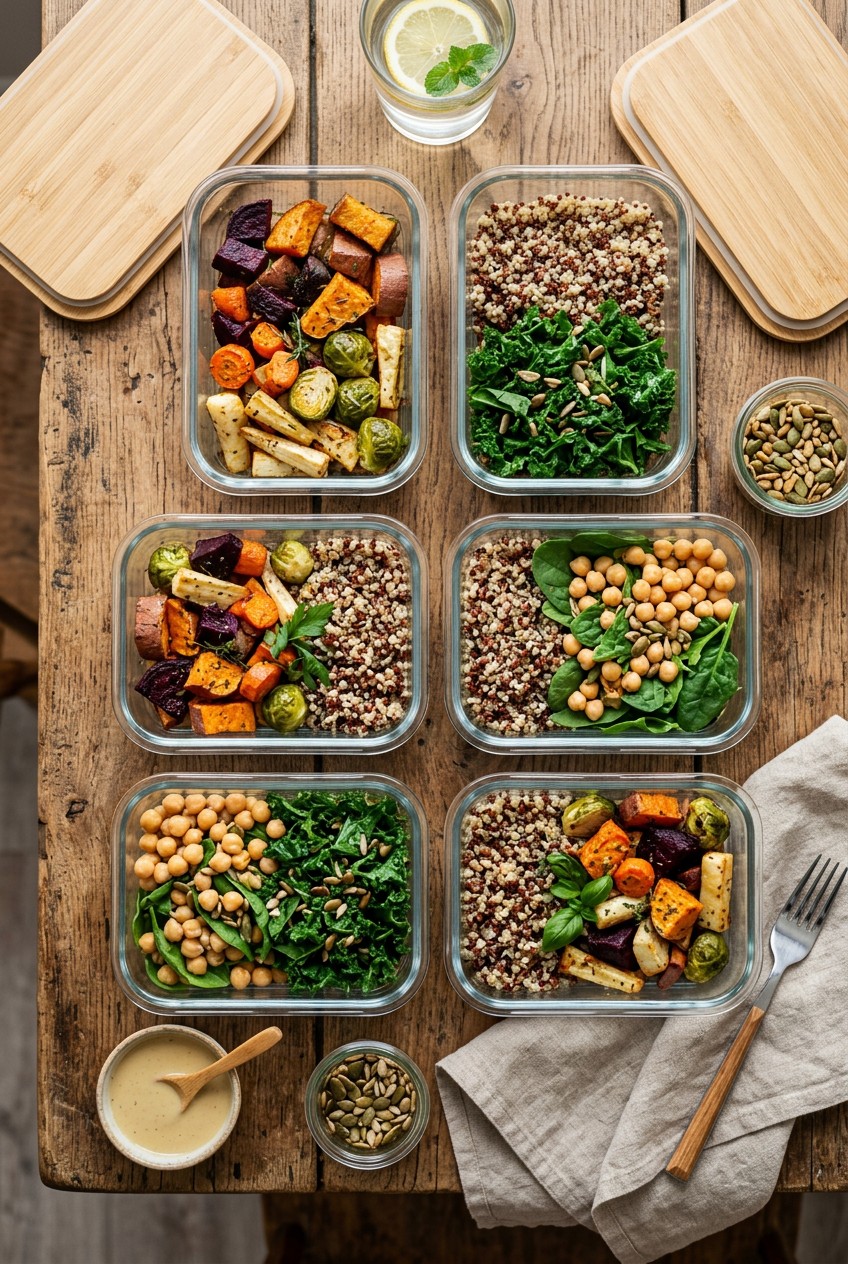
When you’re packing your shiny new glass containers, you need a reliable visual formula to ensure you’re getting balanced nutrition. Aim for 50 percent fruits and vegetables, 25 percent plant-based protein, and 25 percent whole grains or starchy vegetables. It’s a simple, effective formula that prevents you from packing a massive bowl of just plain pasta and feeling sluggish all afternoon. A standard serving of vegetables is about 1/2 cup cooked, or 1 full cup of raw leafy greens. For my Wednesday lunch, I pack 1.5 to 2 cups of roasted broccoli and bell peppers, 1 cup of cooked quinoa, and 4 ounces of baked tofu. That hits the golden ratio. To prevent your salads from becoming a soggy, inedible mess, store your dressings and sauces in separate, tiny glass jars. I make a simple lemon tahini dressing or a vibrant vegan green goddess dressing on Sunday, and it stays fresh in the fridge for 7 days. Here is one last surprising tip to make this formula taste incredible. Roast your vegetables with a touch of balsamic glaze. For an unexpected depth of flavor and slight sweetness, drizzle roasted Brussels sprouts with a high-quality balsamic glaze in the last 5 to 10 minutes of cooking. It caramelizes the sugars and adds a gourmet touch effortlessly.
I hope these strategies help you overhaul your Sunday routine. Veggie meal prep doesn’t have to be a frustrating, messy chore that leaves you with a fridge full of unappetizing, soggy food. By investing in the right glass containers, mastering your air fryer, and understanding basic portion rules, you’ll save money and time. You won’t be tempted by the drive-thru when you’ve a balanced, delicious plant-based meal waiting for you at home. I recommend starting small. Pick just two or three of these tips to implement this coming weekend. Maybe buy a bag of Costco quinoa and a set of Prep Naturals containers, and just see how it feels. Once you experience the convenience of opening your fridge to clearly organized, fresh, ready-to-eat food, you’ll never go back to your old habits. If you found this guide helpful, please save it, pin it to your favorite recipe board, and share it with a friend who’s trying to eat cleaner this year. Let’s make healthy eating accessible, affordable, and genuinely delicious. Happy prepping!
![[8-Pack,30 oz]Glass Meal Prep Containers](https://m.media-amazon.com/images/I/713Zfdsgi4L._AC_UL320_.jpg)
[8-Pack,30 oz]Glass Meal Prep Containers
If you want something that just works, [8-Pack is a safe bet (7 reviews, 4.5 stars).
Frequently Asked Questions
How long does veggie meal prep last in the fridge?
Most cooked vegetables and grains will stay fresh in airtight glass containers for up to four or five days. If you’re prepping delicate greens, keep them separate from wet ingredients and dressings to prevent soggy textures.
Can I freeze my prepped vegetables?
Yes, you can freeze hearty root vegetables for up to eight months. I highly recommend blanching delicate vegetables like spinach or zucchini before freezing them. Use silicone trays to freeze perfect individual portions.
How do I keep my prepped salads from getting soggy?
You absolutely must store your dressings and wet ingredients in separate small containers. Wait to mix your lemon tahini or vinaigrette into your greens until right before you sit down to eat your meal.
What are the best cheap plant-based proteins?
Lentils and black beans are incredibly budget-friendly and packed with protein. A single cup of cooked lentils gives you eighteen grams of protein. Seitan and edamame are also fantastic, affordable options for your weekly rotation.
