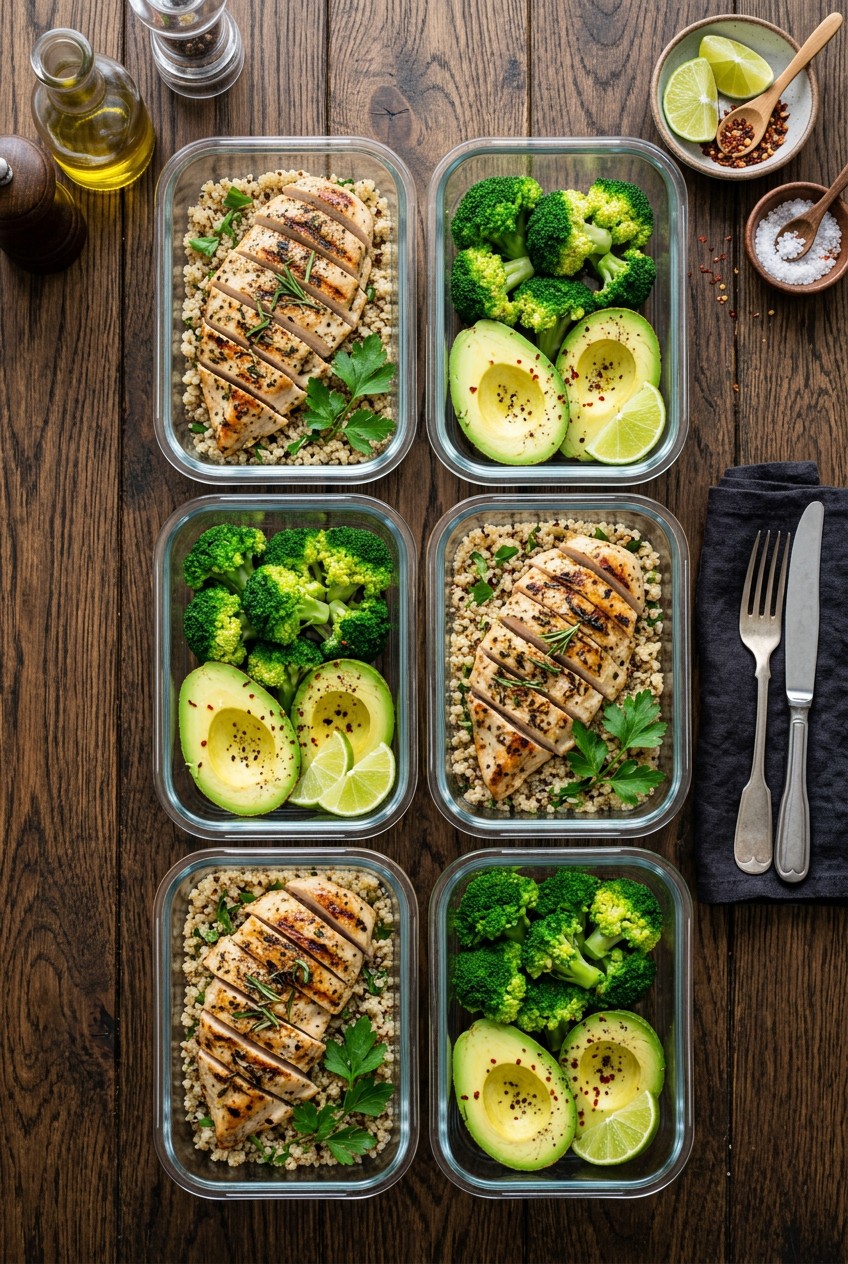
What’s Inside
- My Ultimate Meal Prep Low Carb Secret: Zero Net Carb Tortillas
- Fix Your Crumbly Baking with Psyllium Husk Powder
- Konjac Noodles Are Cheap, But You Must Rinse Them
- The Rule for Batch Cooking Juicy Proteins
- Stop Spiking Your Blood Sugar: Switch to Allulose
- Watch Out for Hidden Carbs in Sneaky Condiments
- Use Frozen Berries to Stop Late-Night Sugar Cravings
- When You’re Too Tired: Keep a Meal Kit on Standby
- Freeze Pesto and Repurpose Leftovers to Avoid Boredom
I spent three hours last Sunday crying over a batch of soggy zucchini noodles that smelled like old gym socks. The water had pooled at the bottom of my glass container, turning my carefully planned lunch into a gray, unappetizing soup. If you’re trying to master your meal prep low carb routine, you know exactly what I’m talking about. The frustration of wasting forty dollars on fresh produce only to throw it away by Wednesday is soul-crushing. I’m Esperanza Eliza, and I’ve made every single mistake possible in the kitchen. I did this wrong for months before figuring it out. I’d buy expensive specialty ingredients, spend my entire weekend chopping vegetables, and still end up ordering a twenty-dollar salad on Tuesday because my prepped food tasted like wet cardboard. Let’s fix your Sunday routine right now. I’m going to show you how I prep all my weekly meals for under $5 a serving without sacrificing flavor or texture. You won’t need a culinary degree, and you certainly won’t need to eat dry chicken breasts ever again. We’re going to focus on real ingredients, smart shortcuts, and specific products that actually work.
1. My Ultimate Meal Prep Low Carb Secret: Zero Net Carb Tortillas

I can’t overstate how much I rely on a good wrap for my lunches. Last Tuesday at Trader Joe’s, I bought their cauliflower wraps thinking they’d save my taco Tuesday. I was completely wrong. They had this awful, gummy texture and tore the second I added 2 tablespoons of salsa. I did this wrong for months before finding the actual solution. Learned that the hard way. You need to upgrade your wraps to something that behaves like real flour. I personally swear by Mission Zero Net Carbs Original Tortillas. They cost exactly $5.49 for a pack of 14 at Target. They have 0g net carbs, 0g sugar, and 7g of protein per 8-inch tortilla. When you warm them up in a hot, dry cast-iron skillet for thirty seconds, they get those beautiful brown bubbles and smell exactly like a traditional flour tortilla. Another excellent option is Hero Flour Tortillas, which you can usually find online for $24.99 for a 6-pack. They boast 1g net carb and 16g of fiber per tortilla. Most people get this wrong by trusting lettuce wraps for heavy, wet fillings. A lettuce wrap won’t hold 4 oz of hot ground beef and melted cheese. It just wilts into a sad, hot mess. Stick to the zero net carb tortillas, wrap them tightly in aluminum foil, and store them in your fridge. They hold up beautifully for four days, making your meal prep low carb lunches incredibly easy to pack for the office.
2. Fix Your Crumbly Baking with Psyllium Husk Powder

If you’ve ever tried baking keto bread, you know the tragedy of slicing into a fresh loaf only to have it crumble into dry sand on your cutting board. I tried making almond flour muffins last year, and they were so dense I could’ve used them as doorstops. The secret ingredient you’re missing is psyllium husk powder. It acts as a binder and helps low-carb baked goods rise, providing a stretchy, bread-like crumb that almond flour alone can’t achieve. I buy Viva Naturals Organic Psyllium Husk Powder for $16.99 for a 1.5 lb bag at Sprouts. The powder feels almost like fine dust between your fingers, but the second it hits 1/2 cup of warm water, it swells into a thick, sticky gel. Expert bakers recommend adding exactly one tablespoon of finely ground psyllium husk powder per cup of low-carb flour. Honestly, this changed how I prep my morning breakfast sandwiches. I mix 1/4 cup of almond flour, 1 tablespoon of psyllium husk, 1 egg, and a pinch of salt in a ramekin, then microwave it for ninety seconds. It pops out as a spongy, savory bun that toasts perfectly. A quick pro tip: make sure you’re buying the finely ground powder, not the whole husks, or your bread will have a gritty, unpleasant crunch. They aren’t cheap upfront, but that one bag will last you six months of weekly baking.
3. Konjac Noodles Are Cheap, But You Must Rinse Them

I almost gave up on low-carb pasta entirely until I figured out how to properly handle konjac noodles. The first time I opened a bag of Shirataki noodles, the fishy, earthy smell hit me so hard I gagged. I made the massive mistake of tossing them straight into a pan of marinara sauce without rinsing them. The entire dish tasted like a dirty aquarium. Please don’t do this. Shirataki konjac rice and noodles are virtually calorie-free and contain minimal net carbs, making them a fantastic volume filler. I buy Well Lean Shirataki Konjac Rice in a 12-pack for $32.99 on Amazon, which comes out to about $2.75 per serving. It has just 5 calories and 2g of carbs. The trick to making them taste amazing is in the prep. You have to dump the bag into a fine-mesh colander and rinse them under freezing cold water for exactly two minutes. You’ll literally smell the earthy odor wash down the drain. After rinsing, drop them into a completely dry, hot skillet. You want to hear them squeak and sizzle as the excess water evaporates. Once they look dry and slightly sticky, you can add your 1/2 cup of heavy cream, parmesan, and garlic. They absorb flavors beautifully and give you that comforting, heavy pasta feeling without the subsequent blood sugar crash. You might also like: 15 Stunning Lunch Weekly Meal Prep Ideas You Haven’t Thought Of

Skroam 10 Pack Glass Meal Prep Containers
A dependable everyday pick — Skroam 10 Pack Glass Meal Prep Containers pulls in 56 ratings at 4.5 stars. Not flashy, just solid.
4. The Rule for Batch Cooking Juicy Proteins

A common meal prep mistake is cooking boneless, skinless chicken breasts on Sunday and expecting them to taste good on Thursday. By day four, chicken breasts turn into dry erasers that you have to aggressively chew just to swallow. I’ve completely stopped buying them. Instead, I buy 3 lbs of boneless, skinless chicken thighs for $2.99 per pound at Costco. The slightly higher fat content is exactly what you need to keep the meat juicy and tender after sitting in a glass container for three days. I lay the thighs out on a massive sheet pan, coat them in 2 tablespoons of olive oil, 1 teaspoon of smoked paprika, and 1 teaspoon of coarse sea salt. I roast them at 400 degrees for twenty-five minutes until the edges get crispy and caramelized. I also batch cook 2 lbs of 80/20 ground beef, which usually runs me $4.99 per pound at Kroger. When you drop the ground beef into the hot cast iron skillet, you want to hear that aggressive hiss. I break it apart and let it get deeply browned before adding 1/4 cup of taco seasoning. Prepping these two proteins gives me total flexibility. I can shred 4 oz of the chicken for a quick salad, or scoop 4 oz of the beef into a bowl with some avocado. It saves me at least an hour of cooking every single weeknight. You might also like: 20 Beautiful Food Prep Ideas for a Fresh New Look
5. Stop Spiking Your Blood Sugar: Switch to Allulose

I have a massive sweet tooth, and for the longest time, I suffered through the awful, minty cooling sensation of erythritol in my keto desserts. I’d bake a beautiful batch of brownies, take one bite, and feel like I just chewed a piece of peppermint gum. It ruins the chocolate flavor entirely. In my kitchen, allulose is the only sweetener I use now. It’s a rare sugar that has zero net carbs, zero calories, and absolutely no weird aftertaste. Best of all, it actually caramelizes and browns exactly like real sugar when you bake it. I usually buy Wholesome Yum Allulose Sweetener for $14.99 for a 12 oz bag, or Besti Monk Fruit Sweetener with Allulose for $23.99 for a 16 oz bag. Last week, I used 1/2 cup of the Wholesome Yum allulose to make a batch of low-carb blueberry muffins, and they came out with those perfect, sticky, golden-brown tops. A major pro tip: allulose can make baked goods brown a little faster than regular sugar, so I always cover my muffin tin with a sheet of aluminum foil during the last five minutes of baking. Skipping the cheap, fat-free, sugar-free syrups at the grocery store and baking your own treats with allulose will save you from those terrible artificial chemical flavors. You might also like: 20 Gorgeous Meal Planning Ideas for Any Style
6. Watch Out for Hidden Carbs in Sneaky Condiments

You can do everything right with your proteins and veggies, and then completely ruin your macros by squirting the wrong sauce all over your plate. I learned this the hard way last month. I bought a bottle of “sugar-free” BBQ sauce at Walmart, assuming it was safe. I poured 4 tablespoons over my pulled pork, only to read the back of the bottle later and see maltodextrin listed as the second ingredient. Maltodextrin can spike your blood sugar even faster than regular table sugar. I was so mad at myself. Many seemingly innocent condiments harbor hidden carbohydrates that derail your efforts. Salad dressings are the worst offenders because companies replace the fat with cheap starches and sugars to make them shelf-stable. Now, I strictly buy brands explicitly labeled keto-friendly, like Primal Kitchen Ranch, which costs $6.49 for an 8 oz bottle at Whole Foods. It’s made with avocado oil and has a rich, creamy texture with sharp dill notes. If I don’t want to spend the money, I just make a homemade vinaigrette in a mason jar. I shake up 2 tablespoons of extra virgin olive oil, 1 tablespoon of apple cider vinegar, a pinch of salt, and 1 teaspoon of Dijon mustard. It takes thirty seconds, costs pennies, and I know exactly what’s in it. Always read the ingredient labels, because food marketing will lie to you.

8 Pack 36oz Large Glass Meal Prep Containers with lids
If you want something that just works, 8 Pack 36oz Large Glass Meal Prep Containers with lids is a safe bet (866 reviews, 4.5 stars).
7. Use Frozen Berries to Stop Late-Night Sugar Cravings

Most people get this wrong: they think they have to give up fruit entirely on a low-carb diet. That’s just not true, and trying to eliminate all sweet, fresh flavors is a fast track to binge eating. When I first started, I cut out all fruit and ended up eating half a jar of peanut butter at midnight because I was craving something sweet. Took me years to figure out. Now, I keep my freezer stocked with berries. While bananas and apples are too high in sugar, frozen berries are an excellent option for adding fiber and antioxidants without breaking the carb bank. A 1/2 cup of frozen blueberries contains approximately 9g of carbs. I buy Wyman’s Wild Blueberries for $11.99 for a 3 lb bag at Target. The wild blueberries are much smaller than regular ones, which means you get more skins and a much deeper, tarter flavor. When I need a quick snack, I measure out 1/2 cup of the frozen berries and pour 2 tablespoons of heavy whipping cream right over the top. The cold berries instantly freeze the cream, creating this incredible, crunchy, ice-cream-like texture. It takes exactly one minute to prep, satisfies my sweet tooth completely, and keeps me away from the expensive keto ice cream pints that cost $7 a pop.
8. When You’re Too Tired: Keep a Meal Kit on Standby

I’m going to be completely honest with you: there are some Sundays where I simply can’t bring myself to chop another onion. Two months ago, I caught a terrible cold on a Friday. By Sunday, the thought of standing in the kitchen for three hours made me want to cry. I didn’t prep anything, and we ended up spending $85 on takeout by Wednesday. That’s why I use low-carb meal kit services as a backup plan for busy or sick weeks. Green Chef offers inventive keto recipes with organic ingredients, typically priced around $12.99 per serving. Their meals usually clock in at 20g net carbs or less. But my absolute favorite for pure convenience is Factor 75. They provide pre-made, dietitian-approved keto meals that are ready in exactly two minutes in the microwave, costing about $13.49 per serving. I ordered their jalapeño popper burger last month, and it was incredible. It came with a side of rich, cheesy cauliflower mash and only had 15g net carbs. The burger was surprisingly juicy, and the jalapeño cream cheese was perfectly spicy. I don’t use them every week because it’s pricier than cooking from scratch, but having a box of Factor meals delivered when I know I have a chaotic week ahead is a total lifesaver. It keeps me on track when my willpower is gone.
9. Freeze Pesto and Repurpose Leftovers to Avoid Boredom

Eating the exact same meal four days in a row is the fastest way to experience meal prep burnout. By Thursday, I can’t even look at my glass container without feeling a wave of depression. I used to force myself to eat dry, leftover chicken and broccoli, but I’ve finally learned how to repurpose ingredients creatively. My favorite trick is freezing pesto. I buy the massive 22 oz jar of Kirkland Signature Basil Pesto for $9.99 at Costco. It’s packed with fresh basil, pine nuts, and parmesan, making it a fantastic source of healthy fats. Because it goes bad quickly in the fridge, I spoon 2 tablespoons into each slot of a silicone ice cube tray and freeze it. Once frozen, I pop the bright green cubes into a freezer bag. On a Thursday, when I’m staring at plain roasted chicken, I just drop a frozen pesto cube right on top of the hot meat. It melts instantly into a bright, garlicky, oily sauce that completely revitalizes the dish. Another great trick is using mushrooms to stretch your expensive meats. I’ll take 12 oz of chopped white button mushrooms and mix them into my leftover ground beef chili. They soak up all the spicy, cumin-heavy chili juices and act as a perfect, meaty filler that adds almost zero carbs while doubling the volume of the meal.
Meal prep doesn’t have to be a miserable, hours-long chore that leaves you with bland, watery food. By swapping out your tortillas, utilizing psyllium husk, and knowing exactly which proteins hold up in the fridge, you can easily keep your meals under $5 a serving. I’ve ruined enough zucchini noodles for the both of us, so please take these shortcuts and make your Sunday afternoons enjoyable again. If you found these tips helpful, make sure you pin this article so you have the exact brand names and measurements ready for your next grocery run!

M MCIRCO 10-Pack,30 Oz Glass Meal Prep Containers 2
M MCIRCO 10-Pack has been one of the most consistently praised picks in this category. 23 reviewers averaged 4.5/5.
Frequently Asked Questions
How long do low carb meal preps last in the fridge?
Most low-carb meals, especially those with cooked meats like chicken thighs or ground beef, will last 3 to 4 days in airtight glass containers. Always store sauces separately to prevent vegetables from getting soggy.
Can I freeze my low carb meals?
Yes, many low-carb meals freeze beautifully. Chili, soups, and casseroles hold up well for up to three months. Avoid freezing raw vegetables or konjac noodles, as their textures will become mushy when thawed.
What is the best low carb sweetener for baking?
Allulose is currently the best option for low-carb baking. It has zero net carbs, doesn’t leave a minty aftertaste like erythritol, and caramelizes just like real sugar in muffins and cookies.
Are konjac noodles actually good?
Konjac noodles are an excellent low-carb filler, but they require proper preparation. You must rinse them thoroughly under cold water for two minutes, then dry-fry them in a hot skillet to remove the earthy odor and improve texture.
