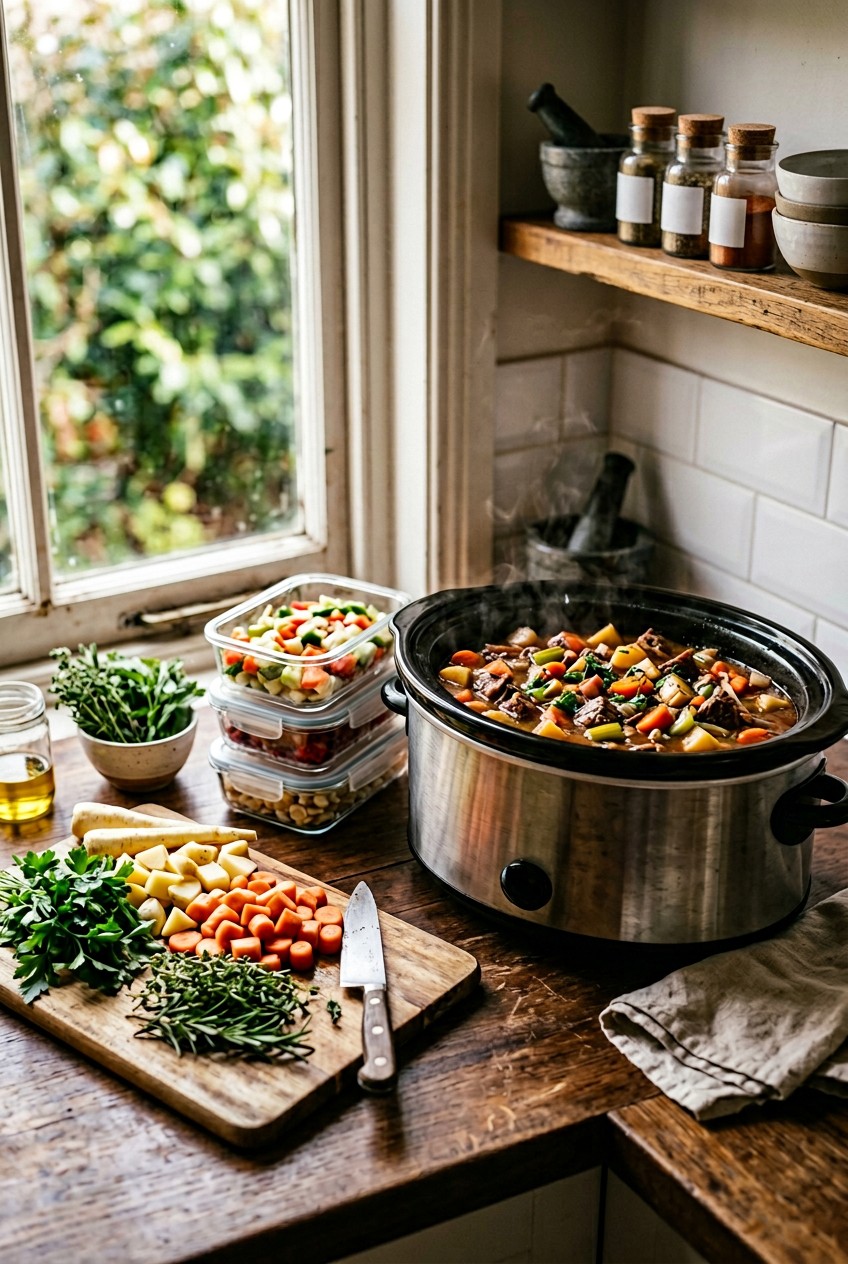
What’s Inside
- Invest in the Right Hardware for Crockpot Meal Prep
- Master the Freezer Dump Bag Method
- Stop Putting Frozen Meat in Your Slow Cooker
- Layer Your Ingredients Like a Pro
- Control Your Liquid Levels Carefully
- Resist the Urge to Peek Under the Lid
- Save Dairy and Fresh Herbs for the Very End
- Use Liners to Save Your Sanity and Scrubbing Time
- Batch Cook Plain Proteins for Maximum Flexibility
- Make Surprising Foods Like Homemade Yogurt and Bread
- Prioritize Food Safety and Proper Storage
Last Tuesday at Whole Foods, I stood crying over a $14.99 container of bland, rubbery pre-cooked chicken breast. My obsession with high-protein crockpot meal prep started right there in aisle four. I was exhausted from working late. The fluorescent lights were giving me a massive headache. I could smell the sharp, sweet scent of overpriced organic apples nearby, but I just felt frustration. I spent years eating dry, flavorless chicken because I thought that’s how healthy eating had to be. I got it wrong for months before finally figuring it out. I’d dump frozen blocks of cheap meat into a flimsy cooker and pray for a miracle. It always resulted in watery, gray slop that tasted like wet cardboard. No exaggeration. Skip the fat-free stuff. It’s terrible and won’t keep you full. Now, I rely on my slow cooker to do the heavy lifting for my weekly lunches. I’m going to share the exact methods I use to make food that actually tastes incredible. I’ll share all my messy kitchen mistakes. You’re going to learn how to fix them and save hours of your precious time.
1. Invest in the Right Hardware for Crockpot Meal Prep

I used to think all slow cookers were the same. I bought a cheap, glazed ceramic model at Target for $20 and used it for three straight years. I made everything in it. Then I read a terrifying article about how ceramic glazes can leach heavy metals like lead and cadmium into your food. This happens especially when you’re cooking acidic stuff. I frequently use a 28 oz can of crushed tomatoes for my chili. I freaked out. I immediately upgraded my hardware. I bought the All-Clad Gourmet Plus 7-Quart Slow Cooker. It costs around $230. Yes, I know that’s a lot of money for an appliance. But it features a non-toxic stainless steel insert. It’s brilliant because it lets you sear meat directly in the pot on the stove before slow cooking. If you’re working with a smaller kitchen, the Instant Precision Dutch Oven Slow Cooker is another fantastic premium option. If you’re on a tight budget, the Crock-Pot 7-Quart Oval Manual Slow Cooker is a reliable workhorse for about $36 at Walmart. Just be mindful of the ceramic insert if you cook a lot of citrus marinades or tomato dishes. I’ve ruined so many meals by using the wrong equipment. The All-Clad is heavy. Dropping the insert on my toe last month left a massive black bruise that throbbed for days. Learned that the hard way. But the peace of mind is worth the weight. Plus, the smooth stainless steel cleans up faster than porous, scratched ceramic. You can’t put a price on easy dishes when you’re exhausted after a long workday.
2. Master the Freezer Dump Bag Method

I’m obsessed with the freezer dump bag method. I buy the massive 145-count box of GLAD Snap Lock Reseal Bags in the gallon size at Costco for exactly $14.99. I spend one hour on Sunday afternoon chopping fresh vegetables and measuring out my dry spices. I toss 2 pounds of raw chicken breast, 1 cup of diced yellow onions, and 2 tablespoons of spicy taco seasoning into a bag. I don’t add liquids yet. That’s a huge mistake. I tried freezing 2 cups of chicken broth inside the bag once. The liquid expanded, popped the plastic seal, and leaked yellow chicken water all over my clean freezer shelves. It smelled like dirty socks for weeks. I had to scrub the freezer with bleach. Now, I just freeze the raw ingredients completely flat. Freezing them flat saves an unbelievable amount of space. You can stack them like little protein-packed books in your freezer drawer. When you’re ready to cook, you just pull the flat frozen block out. I label every bag with a thick black Sharpie. I write the date, the recipe name, and the specific liquid measurements I need to add on cooking day. It takes all the stressful brainpower out of busy weekday mornings. You don’t have to think. You just grab a bag and go. It’s the most efficient way to handle your crockpot meal prep without losing your mind.
3. Stop Putting Frozen Meat in Your Slow Cooker

Most people get this wrong. I definitely did for a long time. I used to grab a rock-hard, 3-pound chuck roast from my chest freezer and toss it directly into the pot. I thought I was being efficient. Then I got raging food poisoning after a dinner party. It was horrifying. The USDA recommends thawing meat completely in the refrigerator overnight. If you put frozen meat in a slow cooker, it sits in the danger zone between 40 degrees and 140 degrees Fahrenheit for too long. Bacteria multiply like crazy. Now, I buy my 2 pounds of grass-fed ground beef at Sprouts for $7.99 a pound. I put the thick freezer bags in a plastic tub in my fridge at least 24 hours before I plan to cook. The tub catches any raw meat juice. Don’t skip the tub. Wiping congealed beef blood off a glass fridge shelf is a nightmare. I learned that the hard way last Thanksgiving. Taking the time to thaw your meat ensures it cooks evenly. It also keeps you from rushing to the bathroom at 2 AM. While we’re talking about meat prep, I recommend browning your meat first if you have the time. Quickly searing a roast in a hot pan for five minutes before adding it to the slow cooker develops a richer flavor and better texture. You won’t regret this extra step. You might also like: 20 Gorgeous Meal Planning Ideas for Any Style

8 Pack 36oz Large Glass Meal Prep Containers with lids
8 Pack 36oz Large Glass Meal Prep Containers with lids has been one of the most consistently praised picks in this category. 866 reviewers averaged 4.5/5.
4. Layer Your Ingredients Like a Pro

Layering matters more than you think. I used to just dump everything in randomly. I ended up with crunchy potatoes and mushy, disintegrated chicken. It was disgusting. The texture was ruined. Hearty, slow-cooking vegetables must go at the bottom of the crock. They need to be as close to the heat source as possible. I buy a 5-pound bag of russet potatoes at Kroger for $3.49. I chop 3 cups of potatoes and 2 cups of fresh carrots. Those go in first. Then, I place my 4 oz portions of pork shoulder right on top of the vegetables. The rich meat juices drip down and flavor the potatoes as they cook. It’s magical. Delicate ingredients go in way later. If you’re adding 1 cup of dry pasta, don’t put it in at the beginning. It’ll turn into a starchy paste. I made a huge batch of minestrone soup last winter and added the dry macaroni at 8 AM. By 5 PM, it looked like wallpaper paste. It tasted even worse. I had to throw the entire batch out. Always add your quick-cooking items in the last thirty minutes. It’s a simple fix that changes the texture of your meals. Your vegetables will stay firm, your meat will be tender, and your pasta will actually have some bite to it. You might also like: 15 Brilliant Good Meal Prep Ideas That Changed Everything
5. Control Your Liquid Levels Carefully

Slow cookers are giant moisture traps. They retain almost all the liquid you put in them because the heavy lid prevents evaporation. Conventional recipes lie to you. If a soup recipe calls for 4 cups of chicken broth on the stove, you only need about 2 cups in the slow cooker. I buy the 32 oz carton of Organic Free Range Chicken Broth at Trader Joe’s for $2.29. I used to pour the entire carton into my chili. It always turned out like watery soup instead of thick, hearty chili. I’d have to stand over the stove reducing it for an hour, which defeats the whole purpose of a slow cooker. You want to fill your pot between one-half and three-quarters full. If you fill it to the brim, it won’t cook properly. It might even bubble over and ruin your countertops. I spent an hour scrubbing burnt tomato sauce off my white tile grout because I overfilled my pot last month. Keep the liquid low. The meat and vegetables will release their own juices as they cook down. Trust the process. You can always add a splash of warm water at the end if it looks too dry. You can’t take water out once it’s in there. Mastering this liquid ratio is the secret to thick, satisfying stews. You might also like: 15 Cozy Easy Dinner Ideas for Every Budget
6. Resist the Urge to Peek Under the Lid

I’m impatient. I love the smell of garlic and onions cooking. I used to lift the glass lid every hour just to smell the food. I’d stir it around with a wooden spoon and feel productive. I was actually ruining my dinner. Every time you lift that lid, you release trapped heat and steam. The internal temperature drops by 10 to 15 degrees instantly. It adds roughly 10 to 20 minutes to your total cooking time. I bought a cheap $12 Taylor meat thermometer at Walmart to test this. I watched the temperature plummet the second I lifted the glass. I was accidentally adding an hour of cook time to my meals just by being nosy. Now, I force myself to walk away. Set it and forget it. That’s the golden rule of slow cooking. If you’re making a 3-pound pork roast, leave it alone for the full eight hours. The steam builds up and creates a self-basting environment. When you disrupt that, you get dry, tough meat that’s hard to chew. Put the lid on. Go read a book. Go for a walk. Just don’t touch the handles until the timer goes off. Your patience will be rewarded with tender, fall-apart meat.

Skroam 10 Pack Glass Meal Prep Containers
Skroam 10 Pack Glass Meal Prep Containers has been one of the most consistently praised picks in this category. 56 reviewers averaged 4.5/5.
7. Save Dairy and Fresh Herbs for the Very End

Let’s talk about the tragedy of curdled milk. I wanted to make a creamy Tuscan chicken dish. I poured 1 cup of heavy cream into the pot at 8 AM and left for work. When I got home, the cream had separated into greasy yellow oil and chunky white curds. It looked like vomit. It smelled sour. I had to throw $25 worth of organic chicken and fresh spinach into the trash. Dairy products like milk, cream, cheese, and sour cream can’t handle eight hours of slow, low heat. They break down. You must stir them in during the last 15 to 30 minutes of cooking. I buy an 8 oz tub of BelGioioso Fresh Mozzarella at Whole Foods for $5.49. I shred it and sprinkle it on top of my chicken right before I turn the machine off. The residual heat melts it perfectly without breaking the fats. The same rule applies to fresh herbs. I love adding 1/4 cup of chopped fresh cilantro to my spicy black bean soup. If you add it early, it turns brown and tastes like dirt. Toss it in right before you serve your bowls. The bright green color and fresh smell will pop beautifully. It makes the dish look and taste like it came from a fancy restaurant.
8. Use Liners to Save Your Sanity and Scrubbing Time

I despise doing dishes. Scrubbing baked-on, crusty barbecue sauce out of a heavy ceramic pot is my personal nightmare. I used to soak my crockpot overnight in the sink. It took up all the space and looked terrible. Then I discovered slow cooker liners. I buy the Reynolds Kitchens Slow Cooker Liners at Target. They cost around $3.89 for a 6-count box. They’re made of a BPA-free nylon blend that withstands high heat safely. You just drape the bag inside the pot before adding your ingredients. When dinner is done, you pull the bag out and throw it away. The pot is clean. It takes exactly three seconds. I know some people hate using single-use plastics. I get it. But on a busy Wednesday night when I’m exhausted, these liners save my sanity. I tried a cheap generic brand once and it melted into my chili. I was fishing out strings of hot plastic with a fork. It was a disaster. Stick to the Reynolds brand or the bulk Syntus packs. They fit my 7-quart pot perfectly. I’ll never go back to scrubbing burnt cheese with a wire brush. If you want to stick to your meal prep routine, you have to remove the friction. Eliminating a twenty-minute scrubbing session is the best way to do that.
9. Batch Cook Plain Proteins for Maximum Flexibility

I used to make massive batches of highly flavored stews. By day four, I was so sick of eating the same cumin-heavy chili that I’d order a pizza. It derailed my high-protein goals. Now, I batch cook plain, versatile proteins. I buy a 6-pound pack of Kirkland Signature Boneless Skinless Chicken Breasts at Costco for about $17.99. On Sunday afternoon, I throw 3 pounds of the chicken into the crockpot with just 1 cup of water, 1 teaspoon of kosher salt, and 1/2 teaspoon of black pepper. I cook it on low for six hours. Then I shred it with two forks. The texture is incredibly soft and juicy. I keep this giant glass bowl of shredded chicken in the fridge. On Monday, I toss 4 oz of it with BBQ sauce for a quick sandwich. On Tuesday, I mix 4 oz with salsa for tacos. On Wednesday, I throw it cold over a spinach salad. It never gets boring because the flavor profile changes every single day. Batch cooking plain meat is the smartest thing I’ve ever done for my diet. It guarantees I hit my protein macros without getting flavor fatigue. You won’t believe how much easier your week feels when you have a massive bowl of cooked protein ready to go.

M MCIRCO 10-Pack,22 Oz Glass Meal Prep Containers
If you want something that just works, M MCIRCO 10-Pack is a safe bet (86 reviews, 4.5 stars).
10. Make Surprising Foods Like Homemade Yogurt and Bread

You aren’t limited to soups and stews. I was shocked when I realized I could make my own high-protein yogurt in the slow cooker. I buy a gallon of whole milk at Sprouts for $4.29. I pour exactly 8 cups of milk into the pot. I cook it on low for two and a half hours. Then, I turn the machine off and let it sit for exactly three hours. Finally, I whisk in 1/2 cup of plain yogurt with live cultures. I wrap the whole pot in a thick beach towel and let it incubate overnight. The next morning, I have thick, creamy, tangy yogurt. It’s wildly cheap and tastes better than store-bought. You can also make baked potatoes. Just wrap them in foil and leave them on low all day. I even make turkey meatloaf in mine. I use a homemade foil sling to lift the greasy loaf out of the pot without breaking it. The first time I tried meatloaf, I didn’t use a sling. I tried to scoop it out with a plastic spatula. It crumbled into a massive pile of gray meat mush. The foil sling is mandatory for heavy items. If you’re making slow cooker brownies or bread, place a clean kitchen towel under the lid. This trick absorbs excess condensation, preventing water from dripping back down and making your baked goods soggy.
11. Prioritize Food Safety and Proper Storage

Food safety is not a joke. I mentioned my awful food poisoning incident earlier. Now, I’m obsessed with temperatures. I always use my food thermometer to ensure my chicken reaches a minimum internal temperature of 165 degrees Fahrenheit (74 degrees Celsius). Never guess by looking at the color. Just poke the thickest part of the meat. Once the food is done, don’t store it in the heavy ceramic insert. It retains heat for hours. If you put that giant hot pot into your fridge, it raises the ambient temperature and spoils your milk. Plus, the food stays in the danger zone for too long. I transfer all my leftovers into Pyrex glass containers. I bought an 18-piece set at Walmart for $34.98. I portion out 1 cup of rice and 6 oz of meat into each shallow container. They cool down rapidly. I snap the airtight lids on within two hours of cooking. The glass doesn’t stain or hold weird garlic smells like cheap plastic tubs do. Honestly, investing in good glass containers changed my entire leftover game. My fridge looks organized, and my food stays fresh and safe all week long. You won’t dread eating leftovers when they’re stored properly in clean glass.
I’ve spent years perfecting my routine. I’ve ruined expensive cuts of meat, melted plastic liners, and scrubbed burnt pots until my knuckles bled. But once you get the hang of it, this method is unbeatable. You’re going to save hours of time and hundreds of dollars on takeout. I recommend starting with the plain shredded chicken batch prep. It’s foolproof and satisfying. Let’s make this week the most productive one yet. Save this guide. Pin it to your favorite recipe board so you don’t forget these specific measurements and temperatures. Happy prepping.
Frequently Asked Questions
Can I put frozen chicken directly into my slow cooker?
No, you can’t. The USDA warns that frozen meat stays in the dangerous temperature zone (40-140 degrees Fahrenheit) for too long, allowing bacteria to multiply rapidly. Always thaw your meat completely in the refrigerator overnight before cooking.
Why is my crockpot meal prep always watery?
Slow cookers retain almost all moisture. You need to reduce the liquid from conventional recipes. Fill your pot only one-half to three-quarters full. The vegetables and meats will release their own juices as they cook down.
When should I add dairy to my slow cooker?
You must wait until the very end. If you cook milk, heavy cream, or cheese for hours, it will curdle and separate into an oily mess. Stir dairy in during the exact last 15 to 30 minutes of cooking.
How long can I keep slow cooker leftovers in the fridge?
Transfer your food to shallow glass containers within two hours of cooking. Do not store food in the heavy ceramic insert. Sealed properly, your high-protein meals will stay fresh and safe to eat in the refrigerator for up to four days.