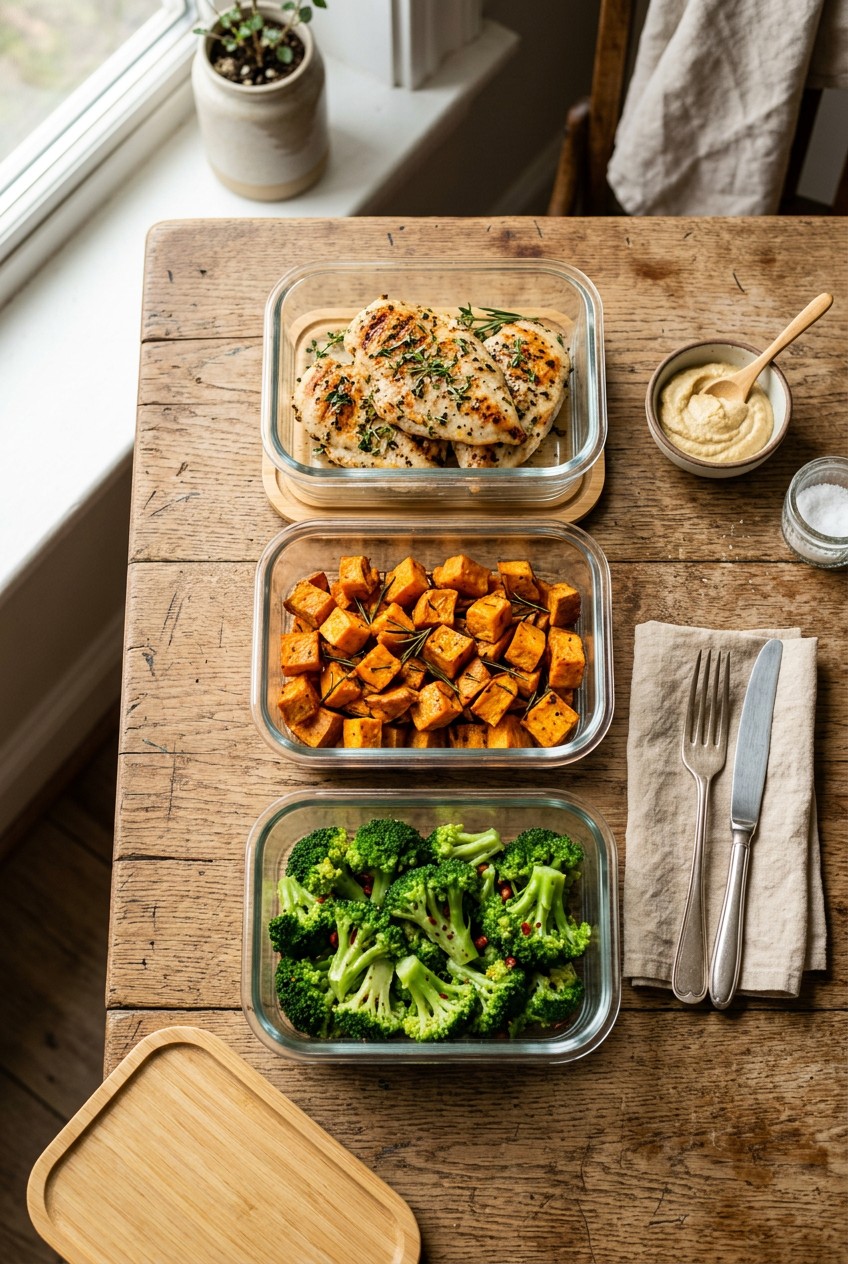
What’s Inside
- High Protein Lunch Meal Prep Starts With Cost-Effective Chicken
- Master Batch Cooking To Reclaim Your Sunday Afternoon
- Don’t Ignore Budget-Friendly Plant Proteins Like Lentils
- Stop Ruining Your High Protein Lunch Meal Prep With Soggy Greens
- Component Prep Is The Only Way To Avoid Flavor Fatigue
- Protein Pacing Actually Keeps You Full Until Dinner
- Sneak In Savory Protein Powder For A Massive Boost
- Pair Protein With Fiber So Your Stomach Doesn’t Hate You
- How To Fix That Nasty Reheated Chicken Taste
- Buy Glass Airtight Containers Or You’ll Regret It
I sat in my car outside the office last Tuesday, staring at a sad $14 salad from Whole Foods. The romaine was wilting into a puddle of watery dressing, the three cherry tomatoes were wrinkled, and I realized I was still starving. My stomach growled over the radio. That was my breaking point. Figuring out high protein lunch meal prep saved my grocery budget and my sanity. If you’re tired of hitting the 3 PM slump because your lunch lacked actual fuel, this is exactly what you need to fix your afternoons. I’m not a chef. I’m just a girl who got tired of spending $75 a week on mediocre takeout that left me hungry an hour later. I’ve made every mistake in my tiny kitchen. I’ve eaten rubbery chicken that squeaked against my teeth, stained my favorite white shirts with leaking vinaigrette, and choked down dry, unseasoned brown rice. Now, I look forward to my packed lunches every morning. Let’s talk about the methods that work in the real world, without spending your entire Sunday standing over a hot stove and crying from exhaustion.
1. High Protein Lunch Meal Prep Starts With Cost-Effective Chicken

Let’s be honest about grocery prices. Buying pre-cooked, sliced chicken breast strips might seem convenient, but it’s a massive waste of money. I used to buy those $7.99 bags of grilled chicken strips at Target, and they tasted exactly like wet cardboard. They had fake grill marks and a rubbery texture. I learned the hard way. Plus, you barely get three meals out of a bag. If you’re serious about your budget and your macros, buy raw poultry in bulk. I swear by the Kirkland Signature boneless skinless chicken thighs from Costco. A 6-pound pack costs around $14.99, and it lasts me weeks. While everyone preaches about chicken breasts, thighs are often 30 to 40 percent cheaper and taste better. A 3.5-ounce serving of cooked chicken thighs gives you about 26 grams of protein. If you prefer white meat, a 3-ounce serving of cooked chicken breast delivers about 27.3 grams. Honestly, the dark meat stays juicier when you reheat it in the office microwave. The smell of dry, overcooked chicken breast wafting through the breakroom is tragic, and I refuse to be the person responsible. Skip the expensive, processed cuts and grab the raw bulk packs. You’ll save money and your tastebuds won’t suffer through another bland Monday. I portion out 4 ounces of cooked thighs per container, which guarantees I’m hitting my protein goals without spending a fortune.
2. Master Batch Cooking To Reclaim Your Sunday Afternoon

Most people get this wrong. They think meal prep means cooking five intricate recipes on a Sunday. I did this for months before figuring it out. I’d spend four hours chopping vegetables, washing three saucepans, and crying over burnt quinoa, only to end up exhausted. You only need to dedicate 90 to 120 minutes one day a week to batch cook your main protein. Keep it simple. I buy 3.5 pounds of raw chicken breast, toss it on a massive baking sheet, and season it with salt, pepper, and garlic powder. I bake it at 400 degrees Fahrenheit for 22 to 25 minutes. You want the internal temperature to hit 165 degrees. Here’s a mistake I used to make constantly. I’d pull the chicken out and immediately slice it to save time. Steam would billow out, the juices would run onto the cutting board, and the meat would be bone dry by Tuesday. You must let it rest for 5 minutes before slicing or shredding to retain moisture. If you hate turning on your oven during the summer, buy an Instant Pot Duo 7-in-1. I got mine for $99.99 at Walmart, and it cooks three pounds of frozen chicken in about twenty minutes. The pressure cooker makes the texture soft, which is perfect for shredding with two forks. Batch cooking a single, versatile protein is the only way I avoid quitting by Wednesday.
3. Don’t Ignore Budget-Friendly Plant Proteins Like Lentils

You don’t have to eat meat for every meal to hit your protein goals, and your grocery budget will thank you for taking a break from poultry. Dried lentils are a cost-effective protein source that nobody talks about enough. They typically range from $0.008 to $0.025 per gram of protein. That’s cheap compared to beef or fish. I buy the Palouse Brand brown lentils for $5.99 for a 3-pound bag online. Two cups of organic brown lentils can yield enough protein for three meals for four people, costing around $6 total. I’ve got a funny story about lentils. Last month, I dropped a fully open 3-pound bag on my kitchen floor. Tiny brown discs went bouncing under the fridge, under the stove, and into my shoes. I was sweeping them up for a week. Despite the mess, I still love them. They hold their shape for meal prep. I boil two cups of dry lentils in vegetable broth at the start of the week. I add a half cup of cooked lentils to my salads or mix them into a vegetarian taco filling with cumin and chili powder. The earthy flavor absorbs whatever dressing you use. If you’re too busy to boil dry beans, grab the Trader Joe’s Steamed Lentils in the produce section. They cost $3.29 for a 17.6-ounce package, and they’re fully cooked. I just rip the bag open and dump them into my containers. You might also like: 20 Gorgeous Meal Planning Ideas for Any Style
![[10-Pack] Glass Meal Prep Containers with Lids](https://m.media-amazon.com/images/I/71VKuXwIKOL._AC_UL320_.jpg)
[10-Pack] Glass Meal Prep Containers with Lids
A dependable everyday pick — [10-Pack] Glass Meal Prep Containers with Lids pulls in 146 ratings at 4.5 stars. Not flashy, just solid.
4. Stop Ruining Your High Protein Lunch Meal Prep With Soggy Greens

There’s nothing worse than opening your lunch container at noon and finding a slimy, wilted mess. A frequent error is sealing hot food immediately. When you snap the lid onto a container full of hot rice and freshly roasted chicken, it traps steam. That steam turns your crisp vegetables into mush. I learned this when I packed a beautiful spinach and quinoa bowl, sealed it to rush out the door, and opened it to find warm swamp water at the bottom. You must allow cooked meals to cool on the counter for 30 to 60 minutes before covering them. For salads, you need a barrier layer. I use hearty greens like raw kale or romaine, or even a thick slice of Tillamook sharp cheddar cheese ($4.99 for an 8-ounce block at Kroger) between wet ingredients and drier ones. Never put dressing directly on your greens on Sunday. I pack my vinaigrettes separately in tiny 2-ounce condiment cups. I also recommend investing in multi-compartment glass containers. I bought a Pyrex Snapware 10-piece glass set for $29.99 at Costco, and it keeps my roasted tomatoes separate from my quinoa until I’m ready to eat. Physical separation is mandatory if you want your food to taste fresh on Thursday. You might also like: 15 Cozy Freezer Meals Ideas to Transform Your Space
5. Component Prep Is The Only Way To Avoid Flavor Fatigue

If you pack five identical containers of plain chicken, broccoli, and rice, you’re going to hate your life by Thursday. I used to force myself to eat the same bland meal every day, and I’d end up ordering a $20 DoorDash burrito by Friday. Instead of preparing full, identical meals, focus on cooking individual components. This allows for mixing and matching so you don’t lose your mind. I prepare 1.5 pounds of cooked chicken, 2 cups of dry quinoa, and a tray of roasted mixed vegetables. I buy red bell peppers and zucchini from Sprouts for about $5 total, chop them, and roast them with olive oil and sea salt. I store the shredded chicken, fluffy quinoa, and caramelized veggies in separate containers. On Monday morning, I might throw chicken, quinoa, and a heavy drizzle of Primal Kitchen Buffalo Sauce ($6.49 at Whole Foods) into a bowl. On Tuesday, I’ll take the same chicken and veggies, but wrap them in a soft Mission carb balance tortilla with smashed avocado. Keeping the components separate prevents flavor fatigue and makes me feel like I’m eating something new every day. You might also like: 15 Brilliant Batch Cooking Ideas That Actually Work
6. Protein Pacing Actually Keeps You Full Until Dinner

You can’t eat 10 grams of protein at lunch and expect to survive the afternoon without raiding the office vending machine. Distributing protein intake evenly throughout the day is known as protein pacing. It’s much more beneficial for muscle synthesis and keeping you full than eating one massive 80-gram steak at dinner. You need to aim for 30 to 50 grams of protein per serving. I track my portions using an Escali Primo digital food scale that I grabbed for $24.95 at Target. It’s satisfying to see exactly how much fuel I’m packing. A 4-ounce serving of cooked chicken breast provides about 35 grams of protein. I always ensure my lunch hits that 30-gram minimum. If I’m eating a green salad, I don’t just sprinkle a few sad pieces of chicken on top. I weigh out a full 4 ounces of meat. I also add a hard-boiled egg or a sprinkle of hemp hearts to bump the numbers up. When I hit 40 grams of protein at noon, I don’t crave sugary snacks at 3 PM. My energy levels stay stable, and I can focus on my spreadsheets. Don’t guess your portions. Weigh your meat and ensure you’re pacing your intake correctly.

Skroam 10 Pack Glass Meal Prep Containers
Honestly, Skroam 10 Pack Glass Meal Prep Containers surprised me — sturdier than it looks in the photos, and over 56 buyers gave it 4.5 stars.
7. Sneak In Savory Protein Powder For A Massive Boost

I know what you’re thinking. Putting protein powder in savory lunch food sounds disgusting. But I’m not talking about dumping vanilla whey into chicken soup. Savory protein powders are real and useful for hitting your macros. I use Meal Boosters Savory Collagen Protein Powder, specifically the White Cheddar flavor. It costs $34.99 for a 14-ounce tub, and it tastes like a rich cheese sauce. You can mix it into stews, creamy pasta sauces, breakfast casseroles, or even scrambled eggs. Unflavored protein powder can also be added to roasted vegetable soups while you blend them. I’ve got a warning, though. Do not dump cold protein powder directly into a boiling hot pot of soup. I did this last winter with butternut squash soup, and the powder coagulated into rubbery, unchewable white lumps. It was horrific, and I had to throw the whole pot away. You must whisk one scoop (20 to 25 grams of protein) into a small amount of cool liquid first. Create a smooth slurry, then stir it into your hot dishes at the very end. I love stirring the cheese-flavored powder into a bowl of spicy lentil stew. It adds a salty flavor and bumps the protein content by 20 grams without adding meat.
8. Pair Protein With Fiber So Your Stomach Doesn’t Hate You

Eating pure meat and cheese might hit your macro goals, but your digestive system will punish you. A major trend in 2026 meal prep is prioritizing gut health over calorie counting. You must pair your protein with whole grains and legumes to get essential fiber. I create a homemade Chipotle-style chicken bowl that tastes better than the restaurant version. I combine 8 ounces of seasoned chicken with 1.5 cups of brown rice and a half cup of canned black beans. I buy Bush’s Black Beans for $1.49 a can at Walmart. The contrast in textures is amazing. You get the chewy brown rice mixed with the soft beans. The fiber slows down your digestion, which means you’re absorbing nutrients steadily over several hours. I used to pack lunches that were just a chicken breast and asparagus. Two hours later, my stomach would be growling during office meetings. Adding a half cup of black beans adds 7 grams of fiber and 7 grams of plant protein. It changes how the meal digests and keeps you satisfied until dinner. Don’t skip the complex carbs. Your gut needs that fiber to process the protein load.
9. How To Fix That Nasty Reheated Chicken Taste

We need to talk about the elephant in the room. Reheated chicken often tastes vile. Lean meats like chicken breast can develop an undesirable flavor due to lipid oxidation when reheated. It smells like a wet dog when you microwave it, and the taste is off-putting. I struggled with this for years. I’d bring my chicken and rice to work, microwave it for two minutes, and then gag. The secret to combating this is using moisture-locking marinades. I use a thick, yogurt-based marinade for all my chicken breasts. I buy a 32-ounce tub of Fage Total 5 percent Greek Yogurt for $6.99 at Whole Foods. I mix a half cup of yogurt with lemon juice, garlic powder, and smoked paprika, then coat the raw chicken before baking it. The lactic acid tenderizes the meat, and the yogurt creates a protective barrier that locks in the juices. When you microwave yogurt-marinated chicken, it doesn’t dry out or develop that metallic flavor. Alternatively, you can poach your meat. Submerging it in seasoned chicken broth keeps it tender and juicy. Stop eating dry, stale-tasting meat on Thursdays and start marinating.

HOMBERKING 10 Pack Borosilicate Glass Meal Prep Containers
If you want something that just works, HOMBERKING 10 Pack Borosilicate Glass Meal Prep Containers with Lockin is a safe bet (23 reviews, 4.5 stars).
10. Buy Glass Airtight Containers Or You’ll Regret It

I can’t stress this enough. Throw away your flimsy plastic takeout containers. I spent my first year of meal prepping using those thin black rectangles you buy in bulk. Within a month, they were permanently stained orange from tomato sauce. Worse, they absorbed the smell of old garlic, making my strawberries taste disgusting. You need to invest in quality, airtight glass containers. I bought the Glasslock 18-piece set for $44.99 at Target, and it changed my Sunday routine. Glass doesn’t absorb funky odors, it doesn’t stain, and it’s safe for the microwave and dishwasher. The airtight snap lids are the most crucial part. They have thick silicone gaskets that prevent outside air from getting in. This stops your food from oxidizing and spoiling in the fridge. I once dropped my canvas lunch bag in the parking lot, and because my plastic container cracked, my oily dressing ruined my shoes. The Glasslock containers have survived multiple drops. Yes, glass is heavier to carry in your tote bag, but it’s worth the extra weight. Your food will stay fresher, taste better, and you won’t be eating microplastics with your chicken and rice.
If you take anything away from this, start small. Don’t try to implement all ten steps this Sunday, or you’ll overwhelm yourself and quit by Tuesday. Pick one lean protein, grab some glass containers from Target, and see how much easier your work week feels. I promise you’ll never want to go back to spending fifteen dollars on a wilted deli sandwich. I’d love to hear what protein you’re prepping first, so save this guide for your next grocery run and let me know how it goes!
Frequently Asked Questions
How long does high protein lunch meal prep last in the fridge?
When stored in airtight glass containers, most cooked proteins like chicken and lentils will safely last 3 to 4 days in the refrigerator. To keep ingredients fresh longer, always let your food cool completely before sealing the lids.
What are the cheapest proteins for meal prep?
Chicken thighs and dried lentils are incredibly cost-effective. A bulk pack of chicken thighs from Costco is often 30-40% cheaper than breasts, while dried lentils cost roughly $0.008 to $0.025 per gram of protein.
How do I stop my meal prep salads from getting soggy?
Never seal hot food in your containers, as the trapped steam wilts greens instantly. Always pack your dressings in separate, tiny containers and use hearty greens or a slice of cheese as a barrier between wet and dry ingredients.
How much protein should be in a meal prep lunch?
Experts recommend ‘protein pacing’ by aiming for 30 to 50 grams of protein per meal. A standard 4-ounce serving of cooked chicken breast provides about 35 grams, which is perfect for keeping you full until dinner.
2 thoughts on “10 High Protein Lunch Meal Prep You Need to See”