What’s Inside
- Picking the Right Base for Protein Pasta Meal Prep
- The Two-Minute Rule for Perfect Texture
- Tossing with Oil to Stop the Dreaded Clump
- Salting the Water Like the Sea
- Hiding Cottage Cheese in Your Sauce
- The Great Sauce Separation Debate
- Saving the Liquid Gold for Reheating
- Why Glass Containers Actually Matter Here
- Nailing the Exact Two-Ounce Portion
Last Tuesday at my desk, I opened my container only to find a gummy block of orange mush. My first protein pasta meal prep had fused into a single, unappetizing brick. I tried to stab it with a fork, but the whole mass lifted out at once. Total disaster. I won’t lie; I tossed it and bought an overpriced sandwich from the lobby cafe. I did this for months before figuring it out. The truth? Cooking legume-based noodles isn’t like boiling wheat pasta. Treat them the same, and you’ll end up with something like wet cardboard.
Getting protein pasta right takes a few tweaks to your Sunday routine. You can’t just boil it, dump it in a bowl, and hope for the best. These noodles absorb water differently, release unique starches, and degrade fast in the fridge. I’ve ruined enough batches of expensive chickpea noodles to know what fails. Let’s walk through the steps, brands, and tricks you need to make your lunches taste good by Thursday.
1. Picking the Right Base for Protein Pasta Meal Prep

Finding the right brand is half the battle. Skip the diet stuff. It tastes like wet cardboard and has no structural integrity. For texture closest to traditional pasta, I swear by Barilla Protein+. It’s a blend of wheat, lentils, chickpeas, and peas. You get 10g of protein per 2-ounce serving (or 17g per 3.5oz), and it costs $2.84 to $2.99 per 14.5oz box at Walmart. It holds up well in the fridge.
If you’re gluten-free and want more protein, Banza Chickpea Pasta is the go-to. It has 11 to 13g of protein per 2-ounce serving and costs about $3.32 per 8oz box. Banza is fragile, though. Overcook it by thirty seconds and it turns to paste. For a high-protein option, I’ve used Explore Cuisine Organic Edamame Spaghetti. It hits 24g of protein and 13g of fiber per 2-ounce serving. I bought a box at Sprouts for $5.99. Honestly? It smells a bit earthy. Rinse it well and pair it with a bold, acidic sauce to mask that flavor. For max protein, The Only Bean Protein Pasta offers 25 grams per 2-ounce serving. A box of six is about $28.99 online. Pick what fits your macros, but know each needs a different approach.
2. The Two-Minute Rule for Perfect Texture

The most crucial step is cooking strictly al dente. Most people mess this up. They follow the box, which is a mistake. Chef John Politte suggests cooking protein pasta one to two minutes less than the label says. These noodles soften much faster than wheat pasta. If the Banza box says 8 to 10 minutes, I aim for 7. I set a loud timer; you can’t walk away from the stove.
I learned this the hard way after a Kroger run. I boiled three boxes of red lentil penne for nine minutes and left them in the colander. Residual heat kept cooking them. By the time I packed them, they were splitting and turning to mush. When you microwave pasta later, it steams even more. If you start with soft noodles on Sunday, you’re eating baby food by Wednesday. Pull them off the heat while they still have a chalky bite in the center.
3. Tossing with Oil to Stop the Dreaded Clump

After draining, rinse the pasta thoroughly with cold water. This stops the cooking, removes excess starch, and keeps it from getting gummy. This is vital for chickpea varieties. Rinsing isn’t enough, though. To stop sticking, you need a physical barrier. I toss the cooled pasta with a little oil. You might also like: 15 Stunning Easy Lunch Ideas You Need to See
I use 1 to 2 teaspoons of avocado oil per 8oz of cooked pasta. I buy liter bottles of Chosen Foods avocado oil at Costco for about $18.99. It has a neutral flavor. I fold the oil through the noodles with my hands or a spatula. You want every noodle glossy, not greasy. Skip this, and the starches will glue the noodles together overnight. You’ll end up with a solid block that needs a knife to separate. Olive oil works, but it solidifies in the fridge, making the pasta feel stiff. Avocado oil keeps strands separate and fresh. You might also like: 20 Clever School Lunch Ideas You Can Try Today
![[8-Pack,30 oz]Glass Meal Prep Containers](https://m.media-amazon.com/images/I/713Zfdsgi4L._AC_UL320_.jpg)
[8-Pack,30 oz]Glass Meal Prep Containers
A dependable everyday pick — [8-Pack pulls in 7 ratings at 4.5 stars. Not flashy, just solid.
4. Salting the Water Like the Sea

A common mistake is under-salting. I used to add a tiny pinch, thinking it was healthier. The result was bland pasta that tasted like flour, no matter the sauce. The water should taste like the sea. This seasons the pasta from the inside as it expands. You might also like: 20 Gorgeous Meal Planning Ideas for Any Style
I use 1 to 2 tablespoons of kosher salt for a 6-quart pot. I buy 3-pound boxes of Diamond Crystal Kosher Salt at Target for $8.99. Wait until the water is at a rolling boil before adding salt, or it can pit your stainless steel pots. Once it’s boiling, dump the salt in. It will bubble up. Drop your noodles in immediately. I cooked for a friend recently and forgot this. The chickpea noodles tasted so flat we had to drown them in hot sauce. Salt is your best friend. It masks the bean flavor and makes it taste like wheat pasta.
5. Hiding Cottage Cheese in Your Sauce

A great way to boost protein is by blending cottage cheese or Greek yogurt into your sauce. I was skeptical. Hot cottage cheese sounded gross. But it changed my Alfredo sauce forever. Blend 1 cup of full-fat cottage cheese with 1/4 cup of milk, 2 cloves of garlic, 1/4 cup of grated Parmesan, and black pepper. It creates a rich, creamy sauce without heavy cream.
I buy 16oz tubs of Good Culture Cottage Cheese at Trader Joe’s for $3.49. You have to blend it until it’s totally smooth. If you just stir it in, you’ll have hot cheese curds—a textural nightmare. I use a small NutriBullet. The friction warms the sauce slightly. Pour this over your cold, oiled noodles. Because it’s thick, it clings to the pasta and won’t make it soggy. Skip the fat-free cottage cheese; it lacks the milk fat to emulsify and will turn into a watery mess.
6. The Great Sauce Separation Debate

For best results, store your cooked pasta and sauce in separate containers. This keeps the pasta from absorbing too much liquid and turning mushy. If I’m making a heavy ragu, I put the sauce in a small jar and the naked, oiled noodles in my main container. I mix them right before I hit the microwave at work.
There is a lazy-day approach, though. The one-pan meal is where pasta cooks directly in a thinned-out sauce. Chef Jack Ovens shows a 65g Protein Cheesesteak Pasta made in one pan. This minimizes cleanup and results in a creamier dish. I get my beef and peppers at Target. The catch? The pasta will be soft by day four. If you hate soft noodles, stick to separate containers. If you like convenience and a baked-ziti texture, one-pan is great. Just undercook the pasta even more if you’re boiling it in the sauce.

KOMUEE 10 Packs 30 oz Glass Meal Prep Containers
KOMUEE 10 Packs 30 oz Glass Meal Prep Containers punches above its price — 45 buyers rated it 4.5 stars. I would buy it again.
7. Saving the Liquid Gold for Reheating

Don’t pour all your pasta water down the drain. Keep about 1/2 to 1 cup in a mug before draining. This is liquid gold. Protein pasta dries out faster than regular pasta in the fridge. Microwave it, and the edges get crunchy.
When I pack lunches, I add 1 tablespoon of this starchy water to each container before sealing. When you microwave it, that water turns to steam, rehydrating the noodles and loosening the sauce. If you’re using a stovetop, add a splash of this water to the skillet. The heat and starch create a glossy coating that looks freshly made. I used to add tap water, but it washes out the flavor. Salty, starchy water binds everything together. It’s a tiny step that makes a massive difference for your Thursday lunch.
8. Why Glass Containers Actually Matter Here

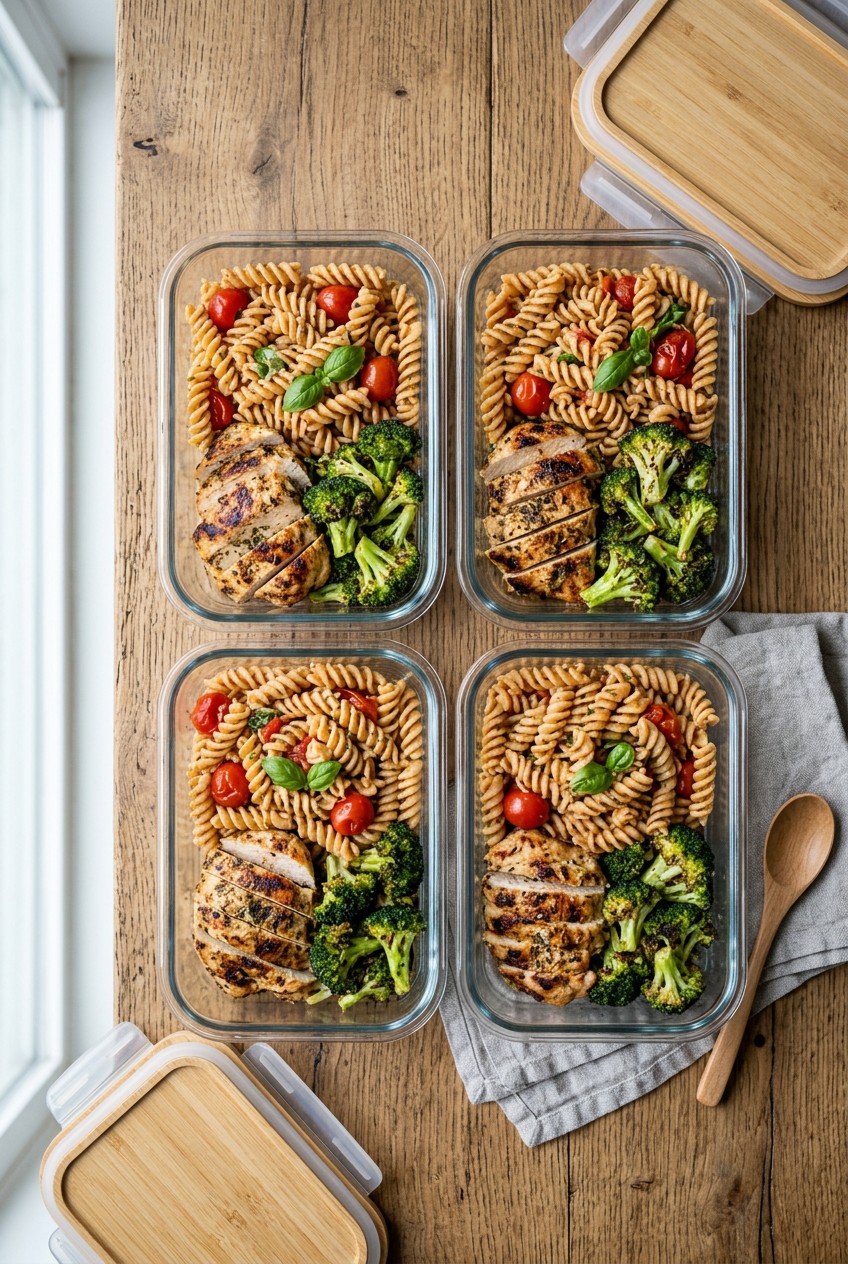
Invest in high-quality glass meal prep containers. They’re non-toxic, oven and microwave safe, don’t stain, and keep food fresher than plastic. Look for snap-on lids. Brands like Luvele are solid, but I buy 4-cup Pyrex rectangles from Whole Foods for $9.99 each. Plastic holds onto garlic smells and warps in the microwave. Glass heats evenly, which is critical for warming dense pasta without burning the edges.
A warning about freezing. Many legume-based pastas get mushy upon thawing. I tried freezing lentil pasta soup once. The noodles turned into sandy sludge. Experts suggest freezing sauces separately and cooking pasta fresh. If you must freeze pasta, keep it very al dente and coated in oil. Also, be careful with glass in the freezer. I dropped a frozen Pyrex container on my kitchen tile after a Whole Foods run, and it shattered into a million icy pieces. Let them thaw in the fridge overnight.
9. Nailing the Exact Two-Ounce Portion

A standard serving is 2 ounces (56g) dry, or 3.5 ounces (100g) for some brands. This yields 10 to 25g of protein. You can’t eyeball this. Alternative pastas are dense, and two ounces looks tiny in the bowl. If you pour from the box, you’ll easily eat four or five servings at once and ruin your macros.
Use a digital food scale. I bought an Ozeri scale on Amazon for $14.99, and I use it every Sunday. I place a bowl on the scale, zero it out, and pour exactly 56g per container. Then I boil all those portions together. Once cooked, I divide the total weight by the number of portions to keep macros exact. It sounds tedious, but it takes sixty seconds. Precise portioning is the only way to avoid overeating. Plus, protein pasta is expensive. Weighing it ensures you don’t waste a $6 box on one accidental mega-portion.
I hope these tips save you from the gummy disasters I suffered through. Protein pasta is an incredible tool for hitting goals without giving up comfort foods, but it demands respect. Grab a box of Barilla Protein+ this weekend, undercook it, toss it in avocado oil, and see the difference. If you found this helpful, please pin this article to your meal prep boards so you can reference the cooking times and brands later!

8 Pack 36oz Large Glass Meal Prep Containers with lids
Honestly, 8 Pack 36oz Large Glass Meal Prep Containers with lids surprised me — sturdier than it looks in the photos, and over 866 buyers gave it 4.5 stars.
Frequently Asked Questions
Which brand is best for protein pasta meal prep?
Barilla Protein+ is best for a traditional wheat-like texture and reheats very well. For gluten-free options, Banza is popular but requires strict undercooking to prevent mushiness. The Only Bean offers the highest protein content.
How do I keep protein pasta from getting mushy?
Cook the pasta 1-2 minutes less than the package directions. Immediately rinse it with cold water to stop the cooking process, then toss the cold noodles with a teaspoon of avocado oil to prevent clumping.
Can I freeze cooked protein pasta?
It is not recommended to freeze legume or chickpea-based pasta, as the texture often degrades into a grainy mush upon thawing. It’s better to freeze your sauces separately and boil fresh pasta.
Should I store the sauce and pasta together?
For meal preps lasting longer than 3 days, store the sauce and oiled pasta in separate containers. This stops the noodles from absorbing excess liquid and becoming soggy before you reheat them.
