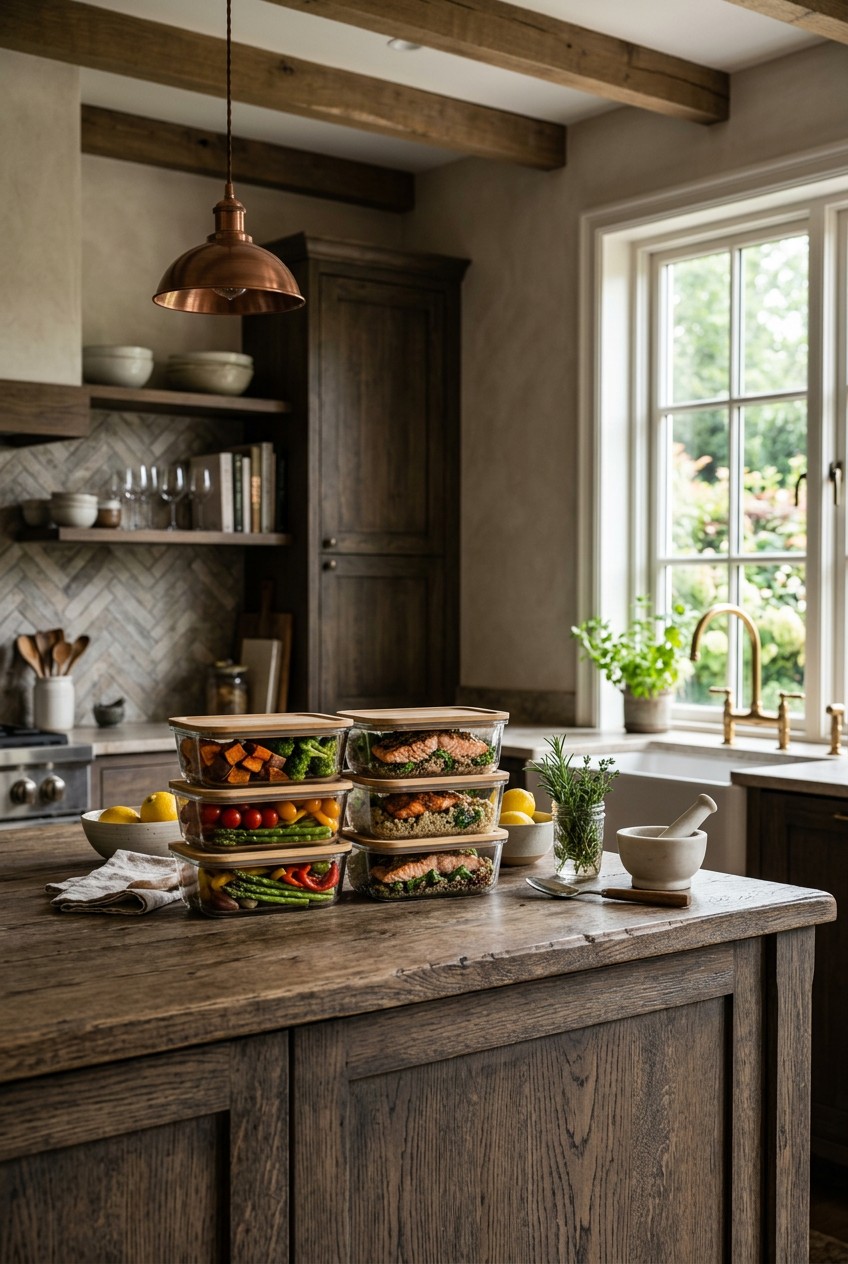
What’s Inside
- Why Borosilicate Glass Meal Prep Containers Are Essential
- The Truth About Leak-Proof Lids and Silicone Gaskets
- Choosing BPA-Free Tritan Plastic for Your Gym Bag
- Using Compartmented Containers for Lazy Portion Control
- Freezing Batch Meals with Souper Cubes
- Swapping Cheap Baggies for Reusable Silicone Bags
- Maximizing Fridge Space with Stackable Designs
- The Gross Truth About Cleaning Silicone Gaskets
Last Tuesday at Whole Foods, I stood in the produce aisle staring at a ruined canvas tote bag. My supposedly secure lunch had exploded. Finding the right meal prep containers is a genuine survival skill. I’m Esperanza Eliza. I’ve spent years figuring this out. My bag was soaked in cold tomato basil soup. The sharp, garlicky smell was radiating off me, and a bright orange stain was spreading across my $24.99 white bag. I had to throw my entire lunch directly into the trash can by the shopping carts. It’s a miserable feeling. I ended up buying a $14 sad desk salad that day because my home-cooked meal was dripping down the side of a public trash can. I swore right then I’d never buy cheap plastic junk again.
If you want to actually stick to your diet, you need gear that works. I’m tired of seeing people struggle with cheap, flimsy plastic bowls that crack in the freezer and melt in the microwave. We’re going to fix your kitchen today. I’m breaking down exactly what you need to buy, what you need to avoid, and why spending a few extra dollars upfront will save your sanity. Let’s get into it.
1. Why Borosilicate Glass Meal Prep Containers Are Essential

I learned about thermal shock the hard way last Thanksgiving. I pulled a standard tempered glass baking dish straight from the fridge and shoved it into a 400-degree oven. About ten minutes later, I heard a loud pop. My entire batch of baked ziti was ruined. There were sharp shards of glass mixed into 8 oz of melted mozzarella cheese and 2 cups of marinara sauce. The smell of burnt cheese on the bottom of the oven lingered for weeks. It’s a mistake I won’t ever repeat. Learned that the hard way.
If you’re serious about heating your food safely, you need containers made from borosilicate glass. This specific material is engineered to withstand extreme temperature changes from -40 degrees to 250 degrees Celsius without cracking. I’m currently obsessed with the Prep Naturals glass meal prep containers. A 5-pack usually runs exactly $35.99 on Amazon, but I recently spotted a similar OXO Good Grips set for $49.99 at Target. Both brands use this superior glass.
The peace of mind is worth the extra cash. I can pull a container holding 1 cup of frozen chili directly from the freezer, pop off the lid, and put it straight into a hot oven. The glass is thick and heavy. It feels substantial in your hands. When you tap a metal spoon against it, it makes a dull, solid thud instead of a fragile clink. Skip the cheap tempered glass. It’s just a shattered dinner waiting to happen. You’ll spend hours sweeping up tiny, invisible shards of glass from your kitchen tile. I found a piece of glass under my fridge three months after my ziti exploded. Don’t risk it.
2. The Truth About Leak-Proof Lids and Silicone Gaskets

Most people assume all snap-on lids hold liquids. I tried this wrong for months before figuring it out. Last Tuesday, I packed exactly 16 oz of homemade chicken noodle soup for work. I shoved the plastic bowl into my backpack and hopped on the bus. When I got to my desk, the bottom of my bag was completely soaked. The cold, greasy broth ruined my paper planner and stained my favorite sweater. The smell of old garlic and wet paper haunted my cubicle all day. It’s absolutely disgusting.
To avoid this nightmare, you must look for containers with four-sided locking lids and integrated silicone gaskets. These gaskets create an airtight seal that physically blocks liquids from escaping. I highly recommend the Rubbermaid Brilliance line. A 5-piece set costs around $34.98 at Walmart. If you prefer glass, the Glasslock tempered glass sets run about $39.99. Both of these brands use thick, flexible silicone rings that compress tightly against the rim of the bowl.
Before you trust a new brand with your lunch, you need to perform a leak test. Fill your brand-new container with 2 cups of tap water. Snap the lid shut, lock all four sides, and hold it completely sideways over your kitchen sink. Give it a hard shake. If a single drop of water escapes, it’s a mess waiting to happen. Don’t use it for soups or dressings. You’ll end up scrubbing oily balsamic vinaigrette out of your car seats. I spent $45 getting my car detailed because a cheap container leaked 3 tablespoons of Italian dressing onto my passenger seat. The vinegar smell baked into the upholstery during the summer heat. Trust me, the silicone gasket is the only thing standing between you and a massive cleaning bill. No exaggeration.
3. Choosing BPA-Free Tritan Plastic for Your Gym Bag

While I love glass for home storage, it’s incredibly heavy to carry around all day. I used to lug three thick glass bowls on the subway every morning. My shoulder physically ached by the time I reached the office. The glass clinked loudly against my water bottle with every step. I finally gave up and switched to lightweight plastic for my daily commute. It makes a massive difference when you’re carrying 3 pounds of food. You might also like: 20 Beautiful Food Prep Ideas for a Fresh New Look
You can’t just buy any cheap plastic bin. You need BPA-free Tritan plastic. This specific material is incredibly durable, lightweight, and completely stain-resistant. The Rubbermaid Brilliance plastic containers are my absolute favorite for this. They stay crystal clear even after months of use. If you want a cheaper option, the 10-piece Bentgo Prep set is available for $15.99 at Target. They’re slightly thinner but still BPA-free and very reliable. You might also like: 15 Stunning Easy Lunch Ideas You Need to See
Tritan plastic solves the dreaded tomato sauce stain problem. Last month, I packed 1 cup of bright yellow turmeric chicken and 1/2 cup of roasted red peppers into my Rubbermaid container. After sitting in the fridge for three days, I washed it with warm soapy water. The plastic wiped completely clean. There wasn’t a single yellow smudge left behind. Skip the cheap grocery store plastics. They taste like wet cardboard after a few weeks and stain instantly. Plus, Tritan plastic doesn’t hold onto lingering odors. I’ve packed 1/2 cup of raw diced onions in my Rubbermaid set. After a quick wash, there wasn’t a single trace of onion smell left in the plastic. You can pack a pungent garlic stir-fry on Monday and fresh, delicate fruit salad on Tuesday without any flavor transfer. It’s a massive relief. You might also like: 20 Cozy High Protein Lunch Ideas for Any Style

Skroam 10 Pack Glass Meal Prep Containers
A dependable everyday pick — Skroam 10 Pack Glass Meal Prep Containers pulls in 56 ratings at 4.5 stars. Not flashy, just solid.
4. Using Compartmented Containers for Lazy Portion Control

Portion control is incredibly tedious if you’re measuring every single ingredient on a digital scale. I used to dump massive portions into giant open bowls. I’d accidentally eat 3 cups of heavy pasta when I only meant to eat 1 cup. The food all mixed together into a mushy, unappetizing pile. My crispy roasted broccoli would soak up the wet teriyaki sauce from my chicken. It was a textural nightmare.
Compartmented meal prep containers fix this problem instantly. I personally swear by the Bentgo Prep 3-Compartment containers. A pack of 10 costs exactly $17.99 at Sprouts. They feature a large 2-cup section and two smaller 1-cup sections. The OXO Prep & Go Divided Containers are another fantastic BPA-free option for $19.99. The embossed measurements on the bottom of the Bentgo trays eliminate all the guesswork. You just fill the sections to the top and you’re done.
The visual appeal of separated food makes a huge difference. I love seeing exactly 4 oz of grilled salmon in the large compartment, sitting safely away from 1/2 cup of wet cucumber salad. The compartments keep the textures distinct. Your dry snacks stay crunchy. Your wet sauces stay contained. It’s a very simple trick, but it completely changes how your lunch tastes at noon. When you open the lid, the smell of the salmon doesn’t overpower the delicate scent of the cucumbers. It keeps your meals tasting fresh instead of like a blended cafeteria tray. I also love that the compartments force me to pack a vegetable. If I see an empty 1-cup section staring back at me, I’m compelled to fill it with 1 cup of snap peas or cherry tomatoes. It subconsciously forces you to build a balanced, healthy plate without overthinking it.
5. Freezing Batch Meals with Souper Cubes

Batch cooking is great until you realize you have no space in your freezer. Last winter, I made 2 gallons of spicy beef chili. I poured it all into a massive plastic storage tub and shoved it into the freezer. Two weeks later, I wanted a single bowl for dinner. I had to stand over the sink with a metal ice pick, chipping away at a solid block of frozen meat and beans. My fingers were numb from the frostbite. It was ridiculous.
Then I discovered Souper Cubes. These thick silicone molds allow you to freeze liquid meals into perfect, individual blocks. A 2-cup tray costs $29.95 at Costco. You pour your hot soup directly into the mold, snap on the plastic lid, and freeze it overnight. The next morning, you pop out the frozen blocks and transfer them into a large freezer bag.
The silicone is thick and smooth to the touch. When you press firmly on the bottom of the mold, the frozen chili block pops out with a very satisfying thud. You can fit ten 1-cup blocks into a single freezer bag, which takes up a fraction of the space of bulky plastic tubs. I currently have exactly 8 cups of chicken tortilla soup stacked neatly in my freezer drawer right now. It’s brilliant. The Souper Cubes also have a rigid steel wire embedded inside the top rim of the silicone. This means when you fill the mold to the brim with 4 cups of liquid hot soup, the tray doesn’t buckle or fold in half when you carry it to the freezer. It stays perfectly flat and stable. It’s a small engineering detail, but it prevents massive spills on your kitchen floor.
6. Swapping Cheap Baggies for Reusable Silicone Bags

Single-use plastic sandwich bags are terrible for storing fragile snacks. I learned this the hard way at the gym. I packed exactly 2 cups of pretzel thins into a flimsy zip-top bag and tossed it into my duffel. When I finished my workout, I reached in for a salty snack. The bag was completely crushed. I was left with a handful of salty pretzel dust and sharp plastic edges.
Reusable silicone bags are a massive upgrade for dry snacks and small meal components. Stasher Bags are currently dominating this space. A single sandwich-sized Stasher bag costs $12.99 at Kroger. They’re made from pure platinum silicone. They’re completely safe for the dishwasher, freezer, microwave, and even the oven. It’s a steep upfront cost, but you’ll never buy a box of disposable baggies again.
The texture of these bags is incredibly satisfying. The silicone is thick, rubbery, and slightly matte. When you pinch the top seal closed, you feel a tight, secure grip that won’t pop open in your purse. I use them constantly to hold exactly 1/4 cup of raw almonds or 1/2 cup of sliced strawberries. The thick walls protect your food from getting smashed by your water bottle. Plus, washing them is surprisingly easy. You just prop them open over a plate rack in your dishwasher. The hot water blasts right inside, melting away any sticky fruit residue or oily nut butter. I also use them to marinate meat. I’ll drop 8 oz of raw chicken breast and 1/4 cup of teriyaki sauce into a bag, seal it, and massage the marinade into the meat. The thick silicone prevents sharp chicken bones from puncturing the bag and leaking raw meat juice all over your fridge shelves.
![[8-Pack,30 oz]Glass Meal Prep Containers](https://m.media-amazon.com/images/I/713Zfdsgi4L._AC_UL320_.jpg)
[8-Pack,30 oz]Glass Meal Prep Containers
[8-Pack has been one of the most consistently praised picks in this category. 7 reviewers averaged 4.5/5.
7. Maximizing Fridge Space with Stackable Designs

A disorganized fridge makes meal prep feel chaotic. I used to buy random, mismatched bowls from thrift stores. Every Sunday, I’d play a frustrating game of fridge Tetris trying to fit my lunches onto the top shelf. One morning, I opened the fridge door and a round, unstable bowl slid right off the stack. It crashed onto my bare toe, spilling 2 cups of cold overnight oats everywhere. The sharp pain in my foot and the sticky mess on the floor ruined my entire morning.
You must buy containers designed specifically to stack. The Zoku 11-Piece Neat Stack set is brilliant for this. It costs $24.99 at Trader Joe’s. The lids have deep, molded grooves that perfectly match the base of the container above it. The Rubbermaid Brilliance line features a similar interlocking design. When they’re empty, the bases nest tightly inside each other, saving precious cabinet space.
The physical click of these containers locking together is incredibly satisfying. When you stack four of the Zoku boxes filled with 6 oz of chicken and 1 cup of rice, they form a rigid, stable tower. You can literally push the tower around the fridge shelf without it tipping over. It makes your fridge look like a professional kitchen instead of a chaotic college dorm room.
10. The Gross Truth About Cleaning Silicone Gaskets

Nobody wants to talk about the hidden dirt in their kitchen. A few years ago, I kept smelling a funky, sour odor in my clean container cupboard. I grabbed a lid and looked closely at the clear silicone ring pressed into the rim. I used a butter knife to pry the rubber gasket out. The entire underside was coated in fuzzy black mold. The slimy texture and the sharp, chemical smell of the bleach I used to scrub it still make me gag. Took me years to figure out.
If you want your meal prep containers to last, you have to clean those gaskets. Snapware makes an incredible airtight glass set that costs $28.99 at Target, but you still have to maintain the seals. Once a week, you need to physically pull the silicone rings out of the plastic lids. Soak them in a bowl of hot soapy water with 1 tablespoon of white vinegar.
This maintenance proves why investing in quality matters. A heavy glass set might cost you $30 upfront, but the glass bases will easily last 5 to 10 years. Cheap plastic sets from the dollar store warp, stain, and crack within 6 months. If you wash your gaskets and treat your lids right, those expensive airtight seals will stay tight and sanitary for years. It’s absolutely worth the effort.
I’ve spent a ridiculous amount of money testing these products so you don’t have to. Honestly, if you’re still fighting with stained, warped plastic bowls that leak dressing all over your car, it’s time to upgrade. Start with a solid set of borosilicate glass for your fridge, and grab a few Tritan plastic pieces for your gym bag. Your Sunday prep routine will feel completely different when you have the right tools. If you found this helpful, pin this article to your favorite meal prep board. Let’s make healthy eating a little less messy.
Frequently Asked Questions
Are glass meal prep containers better than plastic?
Glass containers are much better for reheating and long-term storage because they won’t warp or leach chemicals. However, BPA-free plastic is lightweight and much better for commuting. I highly recommend owning a mix of both materials.
How do I stop my meal prep containers from leaking?
You need containers with four-sided locking lids and thick silicone gaskets. Always perform a leak test with water before trusting a new container with soups or dressings. Make sure the silicone ring is seated perfectly flat.
Can I put plastic meal prep containers in the microwave?
You can microwave BPA-free plastic bases, but you shouldn’t ever microwave the plastic lids unless they have open pressure vents. The intense steam will permanently warp the lids and destroy the airtight seal.
How long do glass meal prep containers last?
High-quality borosilicate glass containers can easily last 5 to 10 years if you don’t drop them. You might need to replace the plastic snap-on lids or silicone gaskets every few years, but the glass bases are incredibly durable.
