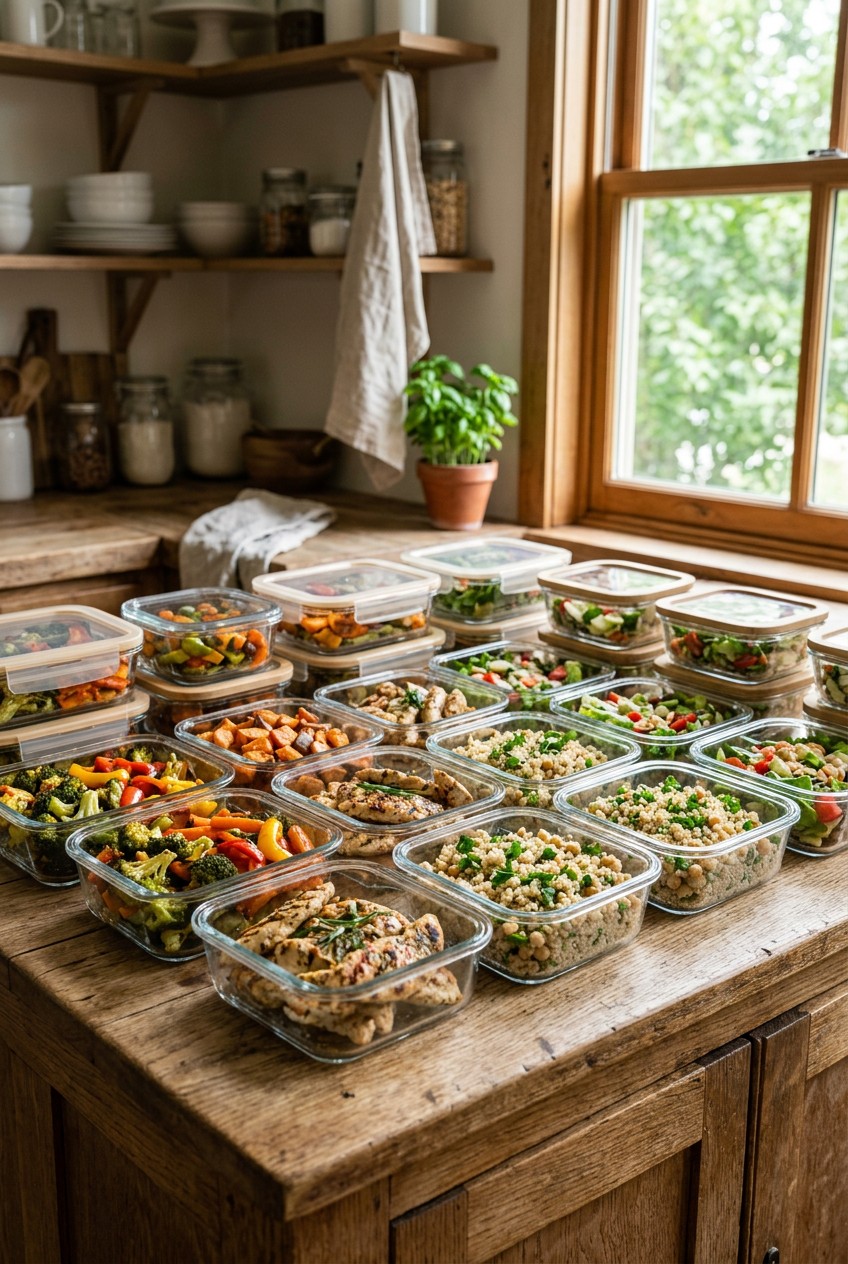
What’s Inside
- Embrace “Micro-Moments” For Family Meal Prep
- Invest In Containers That Actually Seal
- Batch Cook Your Proteins With Precision
- Treat Your Freezer Like A Backup Parent
- Master The “Cook Once, Eat Thrice” Rule
- Pre-Prep Produce With Smart Storage
- Automate Family Meal Prep With Smart Appliances
- Don’t Underestimate A Digital Food Scale
- Combat Picky Eaters With Mini Portions
- Keep A “Safe Foods” List And Pre-Mince Garlic
Last Tuesday at 6:30 PM, I found myself staring into a foggy fridge while my toddler screamed at my ankles. I had three limp carrots, half a jar of cold marinara sauce, and zero plan. The kitchen floor was sticky from spilled apple juice. The sink was piled high with crusty cereal bowls. That specific brand of evening panic is exactly why family meal prep isn’t just a Pinterest trend for me anymore. It’s absolute survival. I used to think prepping meant losing my entire weekend to the kitchen. I pictured endless rows of identical, sad-looking chicken and steamed broccoli sitting on my counters. Gross. Now, I know better. If you’re exhausted by the daily dinner scramble, I’m here to share exactly how I keep my sanity intact. I’ll walk you through the exact containers I use, the groceries I buy, and the messy mistakes I’ve made along the way. I tried this wrong for months before figuring it out. You don’t have to make the same errors. Let’s look at the realistic, effective ways to get hot food on the table without losing your mind.
1. Embrace “Micro-Moments” For Family Meal Prep

Forget the idea that you need an entire Sunday to get things done. I tried the marathon prep sessions. I stood in my kitchen for six hours straight, my lower back screaming, chopping pungent white onions until my eyes swelled shut. By Monday morning, I was too exhausted to even eat the food I prepped. Now, I rely strictly on micro-moments. This means I integrate tiny, five-minute tasks into my regular daily routine. While my Good & Gather dark roast coffee ($6.99 at Target) brews in the morning, I wash and slice a 16 oz carton of fresh strawberries. I use my favorite 6-inch Victorinox chef’s knife to slice them thin. When I’m waiting for my kid to finish a short cartoon, I peel a 2 lb bag of whole carrots. These little pockets of time add up fast. You aren’t dedicating a whole day to the kitchen. You’re just borrowing a few minutes here and there. This prevents the dreaded burnout. I learned that the hard way after throwing out entire batches of spoiled, slimy food because I was too tired to cook them. Break the work down. Chop 1 cup of green bell peppers while you wait for the toaster to pop. Slice 8 oz of sharp cheddar cheese while you chat on the phone. It makes the whole process feel invisible. You won’t even realize you’re prepping.
2. Invest In Containers That Actually Seal

Using cheap, flimsy containers is a massive rookie mistake. I know because I made it. Two years ago, I packed a beautiful, slow-simmered tomato soup in a cheap plastic tub I bought on clearance. I tossed it carelessly into my canvas tote bag. By the time I reached my office, my laptop charger and my favorite notebook were swimming in a greasy, red puddle. It was a complete nightmare. Skip the cheap stuff. You need containers that actually lock tight. I’m fiercely loyal to the Rubbermaid Brilliance line. A 12-piece set runs about $33 to $40 at Walmart. They use a stain-resistant Tritan plastic that stays crystal clear even after holding bright yellow turmeric rice. The plastic latches snap down with a loud, satisfying click, creating an airtight seal. Water doesn’t pool in the lids when you run them through the dishwasher. I also keep a stash of OXO Smart Seal Glass Container Sets (usually around $30 for a starter pack) for things I want to reheat directly in the oven. Glass is heavy, but it won’t warp in the microwave. If you’re storing 4 oz of leftover baked salmon, the thick glass keeps the fishy smell from permeating the plastic. Don’t waste your hard-earned money on containers that crack after one single run in the dishwasher. Buy the good ones once. Trust me on this.
3. Batch Cook Your Proteins With Precision

Cooking raw meat every single night is a massive time sink. For a family of four, you’re looking at cooking roughly 6 to 8 pounds of protein weekly just to cover your bases. I usually buy 2 pounds of Jennie-O ground turkey (around $5.99 at Sprouts) and brown it all at once in a hot cast iron pan with 2 tablespoons of McCormick taco seasoning ($1.25 a packet). The caramel-butter smell of the browning meat is incredible. Then I grab 2 pounds of boneless, skinless chicken thighs. A quick note on chicken. Skip the fat-free stuff. It tastes like wet cardboard. Chicken breasts dry out instantly in the cold fridge. Thighs retain their rich moisture and reheat beautifully. I’ll roast the thighs with 1 tablespoon of olive oil and a heavy pinch of coarse kosher salt. I also hard-boil 1 dozen large eggs for quick, grab-and-go breakfasts. I toss 1 pound of extra firm tofu (usually $2.49 at Trader Joe’s) into the air fryer until it’s crispy on the outside and soft inside. Having these proteins fully cooked and sitting in the fridge means dinner is basically just quick assembly. I can toss 4 oz of the seasoned ground turkey into a cheesy quesadilla, or slice a juicy chicken thigh over a bag of mixed greens. You aren’t cooking from scratch every night. You’re just heating things up. It saves me at least forty minutes every single evening. You might also like: 15 Inspiring Chicken Meal Prep Ideas You Haven’t Thought Of

Skroam 10 Pack Glass Meal Prep Containers
Skroam 10 Pack Glass Meal Prep Containers punches above its price — 56 buyers rated it 4.5 stars. I would buy it again.
4. Treat Your Freezer Like A Backup Parent

Most people get this completely wrong. They view the freezer as a dark graveyard for forgotten leftovers. I view my freezer as a reliable backup parent for the nights when I simply can’t function. Last month, we all caught a terrible stomach bug. Nobody had the energy to stand at the stove. The kitchen tiles felt freezing cold on my bare feet. Thank goodness for my secret freezer stash. I’d honestly rather eat frozen soup than order takeout. I use Souper Cubes (they cost about $19.95 per tray on Amazon) to freeze perfectly portioned blocks of food. I pour exactly 1 cup of homemade chicken noodle soup into each square silicone compartment. Once they freeze rock solid, I pop the cubes out and store them in a large Ziploc gallon slider bag ($5.49 at Target). When disaster strikes, I just grab two frozen cubes, drop them in a heavy pot, and turn on the heat. Watching the steam rise from the melting soup is the best feeling. You can do this with rich marinara sauce, chunky beef stew, or even cooked brown rice. I always keep at least four portions of a hearty meal frozen. It completely eliminates the urge to order a $45 delivery pizza when you’re exhausted. Just make sure you label the bags clearly. I once defrosted what I thought was savory pumpkin soup, only to discover it was pureed sweet potatoes meant for a baby. Use a black sharpie and write the exact date. You might also like: 15 Stunning Aesthetic Batch Cooking You Need to See
5. Master The “Cook Once, Eat Thrice” Rule

Whenever I turn on my oven, I make sure it’s doing serious double duty. Making a single batch of lasagna is a complete waste of a hot oven. I always buy two boxes of Barilla oven-ready noodles ($2.69 each at Kroger) and build two heavy pans of lasagna side by side. We eat one bubbling, cheesy pan for dinner, and the second one goes straight into the deep freeze. This simple hack cuts my cooking frequency drastically. I do the exact same thing with rich Bolognese sauce. I buy three 28 oz cans of San Marzano crushed tomatoes (around $4.99 each) and simmer a massive pot of thick meat sauce. The smell of garlic and tomatoes fills the whole house. On Monday, we eat it ladled over hot spaghetti. On Wednesday, I spoon 1/2 cup of that same sauce over fluffy baked potatoes with melted sharp cheddar. On Friday, I add 1 can of rinsed kidney beans and 1 tablespoon of dark chili powder to the remaining sauce, and suddenly we have spicy chili con carne. I top it with a dollop of sour cream and fresh cilantro. You aren’t eating the exact same boring leftovers every night. You’re cleverly repurposing a base ingredient into entirely new textures and flavor profiles. I tried eating plain chicken and rice four days in a row once. I hated every single bite. Mixing up the visual presentation is the only way my family won’t complain about eating leftovers. You might also like: 20 Inspiring Meal Prep Ideas for Any Style
6. Pre-Prep Produce With Smart Storage

Washing and chopping vegetables the moment you get home from the busy store is a fantastic habit. But if you don’t store them correctly, they turn into a slimy, foul-smelling mess within forty-eight hours. I shop at Costco for bulk produce, pushing that giant cart through the freezing cold produce room. Because I buy in bulk, I’ve got to be extremely careful about rapid spoilage. I buy the massive 2 lb bag of fresh broccoli florets ($5.99) and immediately divide it into Pyrex 4-cup round glass containers ($6.99 each). I line the bottom with a dry paper towel. The paper towel absorbs excess moisture and keeps the broccoli incredibly crisp for up to five days. For raw carrots and celery, I cut them into long sticks and drop them into wide-mouth glass mason jars. I fill the jars with ice-cold water until the veggies are fully submerged. This keeps them incredibly crunchy. You get that loud, satisfying snap when you bite into them. I do this with spicy radishes and crisp bell peppers too. Just remember to change the cloudy water every two days. Pre-washing 1 lb of baby spinach and storing it with a paper towel means I can grab huge handfuls for morning smoothies without even thinking. If the veggies are already prepped and visible, my kids will actually eat them. If they’re hiding in the dark crisper drawer in sweaty plastic bags, they rot.

M MCIRCO 10-Pack,30 Oz Glass Meal Prep Containers 2
If you want something that just works, M MCIRCO 10-Pack is a safe bet (23 reviews, 4.5 stars).
7. Automate Family Meal Prep With Smart Appliances

Babysitting a bubbling pot of rice on the stove is a complete waste of precious time. It always boils over, leaving a sticky, starchy crust on my burners that takes twenty minutes to furiously scrub off. I refuse to do it anymore. I heavily rely on my Instant Pot Duo 7-in-1. It costs about $99.99 at Target, and it does the hard work of three different appliances. I dump 2 cups of rinsed brown rice and 2.5 cups of cold water into the steel pot, press a single button, and walk away. Twenty minutes later, the machine beeps, and I’ve got perfectly fluffy rice. I use my trusty Crock-Pot slow cooker for massive, tough cuts of meat. I’ll buy a 3 lb beef chuck roast ($14.99 at Whole Foods), toss it in the heavy ceramic insert with 1 cup of dark beef broth and 3 cloves of smashed garlic, and let it cook on low for eight long hours. The smell of savory, slow-cooked beef and rich gravy fills the house by 5:00 PM. The tender meat shreds effortlessly with two standard forks. Automating these heavy, time-consuming components frees up my hands completely. While the machines do the heavy lifting, I can focus on quick, easy tasks like whisking a tangy vinaigrette or wiping down the sticky counters. Let the smart appliances work for you.
8. Don’t Underestimate A Digital Food Scale

Eyeballing portions is exactly how I used to end up with a massive mountain of cooked pasta and only enough red sauce for two people. It drove me absolutely crazy. I finally bought the KitchenAid Dual Platform Digital Kitchen Scale for $49.99, and it completely changed my kitchen routine. Measuring by volume (like using a standard plastic measuring cup) is incredibly inaccurate for chunky things like chopped chicken or oddly shaped raw pasta. When I prep my family’s lunches, I place the glass container on the sleek glass surface of the scale, hit the tare button to zero it out, and weigh exactly 4 oz of cooked protein. I add exactly 150 grams of cooked quinoa. This guarantees that every single portion is perfectly identical. Nobody gets shortchanged, and I don’t run out of food by Thursday afternoon. It also helps immensely with healthy snacking. I weigh out exactly 15 grams of raw almonds instead of mindlessly eating from the bag. It’s also brilliant for making sticky marinades. I weigh out 20 grams of thick honey instead of trying to scrape it out of a messy measuring spoon. If you’re trying to manage your tight grocery budget, a digital scale prevents you from over-prepping. You cook exactly what you need. It sounds tedious, but it actually removes all the stressful guesswork from the process. Took me years to figure out.
9. Combat Picky Eaters With Mini Portions

If you put a massive scoop of a mixed, messy casserole in front of a stubborn toddler, they will likely scream. I know this because my youngest used to throw his entire plate if his green peas even slightly touched his roasted chicken. The visual overload of a huge, mixed meal is deeply intimidating for little kids. Now, I focus heavily on mini portions and deconstructed meals. I use the PlanetBox Rover stainless steel lunchbox ($59.95 online) because it has lots of tiny, separate compartments. The metal latches are easy for tiny hands to open. Instead of a baked chicken and rice casserole, I serve 1/4 cup of plain white rice in one section, 2 oz of diced roasted chicken in another, and 5 or 6 raw baby carrots in the third. I keep the dipping sauces completely on the side. I usually offer 2 tablespoons of Hidden Valley Ranch. When kids can see exactly what they’re eating, they’re much more likely to try it. I also make fun, bite-sized versions of adult meals. I bake mini spinach quiches in a flexible silicone muffin tin. I make tiny turkey wraps using 4-inch soft flour tortillas. It makes the food look fun and highly manageable. You aren’t forcing them to eat a huge, scary plate. You’re just offering a colorful, low-pressure tasting menu. It saves me from cooking two separate dinners every single night.

Vtopmart 5Pack 22oz Glass Storage Containers with Lids
Vtopmart 5Pack 22oz Glass Storage Containers with Lids punches above its price — 32 buyers rated it 4.5 stars. I would buy it again.
10. Keep A “Safe Foods” List And Pre-Mince Garlic

Decision fatigue is the real enemy of consistent meal prep. By Friday at 5:00 PM, my brain is completely fried. I can’t invent a new culinary masterpiece. This is why I keep a written “Safe Foods” list taped directly to the inside of my pantry door. It’s a simple list of five meals my family will eat without any loud complaints. Taco Tuesday, spaghetti and meatballs, breakfast for dinner, homemade cheese pizza, and crispy chicken quesadillas. When I’m too tired to plan, I just randomly pick one from the list. To make these safe meals even faster, I use my absolute favorite time-saving hack. I pre-mince an entire sleeve of fresh garlic on Sunday afternoon. I chop about 3 entire heads of garlic and place them in a small glass jar. I pour 1/4 cup of Pompeian Extra Virgin Olive Oil ($8.99 at Walmart) over the garlic until it’s fully submerged, and seal the lid tightly. The oil takes on a beautiful golden hue. It stays fresh in the cold fridge for a full week. Whenever a recipe calls for garlic, I just scoop out 1 teaspoon of the oil-soaked goodness. No peeling thin skins, no sticky fingers, no smelly cutting boards. I highly recommend trying this specific technique. Pin this article to your favorite recipe board so you don’t forget these steps. You’ve got this, and your weeknights are about to get so much easier.
Frequently Asked Questions
How many days in advance can I do family meal prep?
You can safely prep most cooked proteins and chopped vegetables for up to four days in the fridge. I highly recommend using airtight glass containers to maintain freshness and prevent any funky odors from spreading.
What is the best way to start family meal prep if I’m overwhelmed?
Start with micro-moments instead of marathon Sunday sessions. Wash your fruit while your coffee brews, or chop one vegetable while waiting for the oven to preheat. Small, consistent steps prevent burnout and build sustainable habits.
How do I handle family meal prep for picky eaters?
Focus on deconstructed meals and mini portions. Instead of mixing everything into a large casserole, serve the rice, cooked protein, and raw vegetables in separate, small compartments. It’s much less intimidating for kids to eat.
Are expensive storage containers necessary for family meal prep?
You don’t need a massive budget, but investing in high-quality, leak-proof containers is crucial. Cheap plastic warps and leaks. I swear by durable, locking containers because they prevent spills and keep your prepped food fresh longer.
