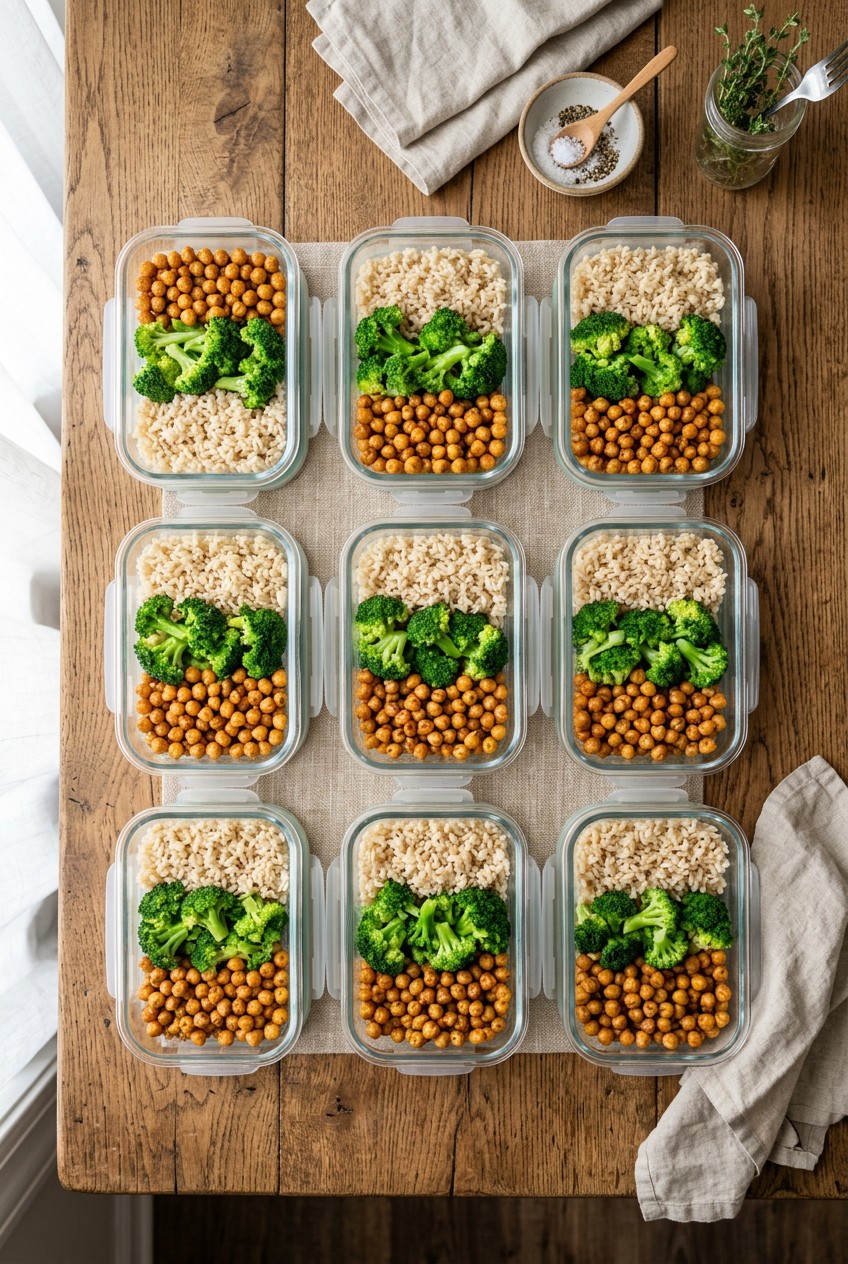
What’s Inside
- Master The Art Of Cheap Healthy Meal Prep With Lentils
- Embrace Eggs For Versatile Protein
- Opt For Chicken Thighs Over Breasts
- Stock Up On Canned Tuna For No-Cook Days
- Use AI Meal Planners For Automated Prep
- Implement The 50/25/25 Rule For Balanced Portions
- Shop Your Pantry First To Save Cash
- Buy In Bulk And Utilize Warehouse Stores
- Prioritize Seasonal Produce And Store Brands
- Avoid The Common Mistake Of Over-Prepping
- Invest In Quality Storage Containers
Last Tuesday at Whole Foods, I stood frozen in aisle four staring at a tiny $14.99 salad, realizing my grocery budget was totally shot. Figuring out cheap healthy meal prep shouldn’t feel like a second mortgage. I’m embarrassed to admit how many times I’ve tossed fuzzy, rotting spinach because my big plans died by Wednesday. I did this wrong for months. Soggy chicken. Mushy broccoli. Wet cardboard flavors. Let’s fix that. I’ve finally nailed a routine that actually tastes good and costs pennies compared to eating out. Took me years to figure out.
1. Master The Art Of Cheap Healthy Meal Prep With Lentils

Skip the fat-free stuff and the overpriced fake meats. They taste like wet cardboard. If you want serious nutritional bang for your buck, dried lentils are your best friend. They’re consistently the most economical complete protein out there. We’re talking $0.008 to $0.025 per gram of protein. Last month at Sprouts, I grabbed a 1-pound bag of their Sprouts Brand Dried Brown Lentils for just $1.69. That single bag yields over 8 cups cooked and provides roughly 60 grams of protein. It’s a great way to stretch your budget without sacrificing flavor.
Unlike dried beans, lentils don’t need an overnight soak. I’m way too impatient for that. They cook in 20 to 25 minutes. I batch cook a 1-lb bag with 4 cups of water, 1 teaspoon of kosher salt, 2 cloves of smashed garlic, and 1 tablespoon of cumin. The smell of earthy cumin filling my tiny kitchen on a Sunday is intoxicating. It creates 6 to 8 servings for the week. I toss them into bowls with roasted sweet potatoes or mix them into cold salads. A common mistake is boiling them at a rolling boil. Don’t do this. They’ll explode into mush. Keep it at a gentle simmer so they stay firm and satisfying.
2. Embrace Eggs For Versatile Protein

Eggs are an unbeatable protein source. They cost about $0.015 to $0.025 per gram of protein. I’m shocked by people who only eat them for breakfast. A dozen large eggs typically run $2 to $4 depending on the store. I usually grab the Kroger brand Grade A Large Eggs for $2.49. Each egg packs about 6 grams of protein. I can’t imagine my weekly routine without having a batch of these ready.
I hard-boil a dozen eggs at the start of the week for quick snacks. I did this wrong for months. I’d boil them too long, and they’d get that gross, chalky green ring around the yolk. It smells like sulfur and tastes worse. Now, I bring a pot of water to a boil, lower the eggs in with a spoon, and set a timer for exactly 9 minutes. Then, they go into a bowl of ice water for 5 minutes. The shells slip right off, and the yolks are creamy and bright. I sprinkle 1/2 teaspoon of Trader Joe’s Everything But The Bagel Seasoning ($1.99 for a 2.3 oz jar) over two halved eggs. It adds an incredible salty, garlicky crunch. They last 3 to 4 weeks in the fridge.
3. Opt For Chicken Thighs Over Breasts

I’m going to say something controversial. Chicken breasts are overrated. They dry out in the microwave and turn into rubber. While breasts are popular, chicken thighs are often 30 to 40 percent cheaper and offer similar protein. You get around 26 grams per 3.5-ounce serving. They’re also way more forgiving to cook and freeze beautifully for up to 3 months. Plus, cleanup is easy when you bake them on a sheet pan lined with foil.
Look for bone-in, skin-on chicken thighs. Yesterday at Target, I bought a 3-pound package of Good & Gather Bone-In Chicken Thighs for $7.49. That’s roughly $0.04 per gram of protein. The extra fat keeps them juicy during reheating. I marinate them in 2 tablespoons of olive oil, the juice of one lemon, 1 teaspoon of dried oregano, and 2 minced garlic cloves. Marinate for at least 24 hours. When you roast them at 400 degrees for 35 minutes, the skin gets shatteringly crisp, and the fat renders into a savory pan sauce. I used to buy boneless skinless breasts because I thought they were healthier, but I dreaded eating my lunches. The texture was fibrous and dry. Switching to thighs saved my routine. The rich aroma of roasting chicken fat makes my whole apartment smell amazing.
![[8-Pack,30 oz]Glass Meal Prep Containers](https://m.media-amazon.com/images/I/713Zfdsgi4L._AC_UL320_.jpg)
[8-Pack,30 oz]Glass Meal Prep Containers
[8-Pack has been one of the most consistently praised picks in this category. 7 reviewers averaged 4.5/5.
4. Stock Up On Canned Tuna For No-Cook Days

Canned tuna is an excellent, no-cook protein option. It often costs around $0.75 per serving. Specifically, get light or skipjack tuna in water. It’s cheaper and significantly lower in mercury than albacore. I swear by StarKist Chunk Light Tuna in Water. A 5-ounce can is usually $1.19 at Walmart. I always keep at least five cans in my pantry for emergencies.
I mix one can with 2 tablespoons of Fage Total 5% Greek Yogurt ($1.49 for a 5.3 oz cup), 1 teaspoon of Dijon mustard, and a squeeze of fresh lemon juice. The Greek yogurt makes it creamy without the heavy, cloying feeling of mayonnaise. It creates a bright, tangy tuna salad that stays fresh in the fridge for up to 4 days. I eat it scooped onto cucumber slices or stuffed into half a bell pepper.
Honest negative here. Don’t prep tuna salad with raw onions if you’re keeping it in the fridge for more than two days. I made this mistake last summer. By day three, the raw onions had fermented and made the batch taste like a damp basement. It was awful. Stick to celery or radishes for crunch, and add a pinch of salt and black pepper right before you eat it. It’s a lifesaver when you’re exhausted. You might also like: 20 Clever School Lunch Ideas You Can Try Today
5. Use AI Meal Planners For Automated Prep

I’m slightly obsessed with how tech is changing grocery shopping. In 2026, AI meal planners are trending hard. They generate personalized weekly menus and grouped grocery lists. This saves me easily 5 hours a week and cuts my food costs by 30 to 50 percent. You might also like: 15 Brilliant Simple Meal Prep Ideas for a Fresh New Look
I use an app called SummitPlate. The basic version is free, but I pay for the Pro version at $7.99 a month. It’s worth it. These tools minimize waste by overlapping ingredients across meals. For example, if a recipe calls for 1/2 bunch of cilantro, the app assigns the other half to a different meal later. No more slimy, black cilantro rotting in the crisper drawer. You might also like: 20 Inspiring Carnivore Meal Prep Ideas That Are Totally Worth It
Before I used this, I’d wander the aisles grabbing random stuff. I’d end up with 4 jars of peanut butter and zero actual meals. Now, I walk into the store with a laser-focused list. The app adapts to my preferences. I tell it I have 45 minutes on Sunday and a $50 budget, and it spits out a flawless plan. Last week, it had me buy a 16 oz bag of whole carrots for $1.29 to use in both a stir-fry and a roasted side dish. It feels like having a personal assistant.
6. Implement The 50/25/25 Rule For Balanced Portions

Portion control used to baffle me. I’d pack a massive bowl of pasta with three tiny pieces of broccoli and wonder why I was starving two hours later. An expert-recommended approach for balanced prep is the 50/25/25 rule. It means 50 percent fruits and vegetables, 25 percent lean protein, and 25 percent grains or starchy vegetables.
Visually dividing your container this way takes the guesswork out of it. For example, a perfect lunch might consist of 2 cups of mixed greens, a 4 oz palm-sized portion of cooked chicken, and 1/2 cup of brown rice. I love using Trader Joe’s Organic Brown Rice ($3.99 for a 3-pack of microwaveable bags). It’s slightly chewy, nutty, and saves me 45 minutes of boiling rice on the stove.
Filling half the box with veggies adds volume and crunch without driving up the grocery bill. I usually chop up 1 cup of English cucumbers and 1 cup of cherry tomatoes. The snap of a cold, fresh cucumber is the best contrast to savory chicken and warm rice. If you aren’t doing this, you’re probably overeating expensive proteins and carbs while neglecting cheap, filling fiber. It totally shifted how I view a complete meal.

KOMUEE 10 Packs 30 oz Glass Meal Prep Containers
Honestly, KOMUEE 10 Packs 30 oz Glass Meal Prep Containers surprised me — sturdier than it looks in the photos, and over 45 buyers gave it 4.5 stars.
7. Shop Your Pantry First To Save Cash

Before you even think about a grocery list, take inventory of your fridge, freezer, and pantry. This tip helps you utilize forgotten ingredients and prevents duplicate purchases. I can’t tell you how many times I’ve bought a fresh bottle of soy sauce only to find three half-empty bottles hiding behind the baking soda.
Last Sunday, I dug through my pantry and found a half-used bag of Quaker Old Fashioned Oats. Wholesale in 2026, these cost around $0.31 to $0.94 per pound, but a standard 18 oz canister is about $3.49 at my local store. I also found a dusty can of Goya Chickpeas ($1.39) and a jar of half-eaten marinara sauce. Instead of buying new groceries, I planned my whole week around those items. I made overnight oats for breakfast and a chickpea tomato stew for dinner.
Most people get this wrong by treating their pantry like a black hole. Stuff goes in and never comes out. I highly recommend taking everything out of your cupboards once a month. Wipe down the shelves. Look at the expiration dates. Holding a crinkly, forgotten bag of quinoa in your hands forces you to get creative. It’s basically free food you already paid for.
8. Buy In Bulk And Utilize Warehouse Stores

Purchasing staples in bulk from warehouse stores can lead to massive savings. If you aren’t shopping at Costco or a similar store for your base ingredients, you’re leaving money on the table. Consider buying large quantities of items like oats, rice, beans, and frozen vegetables.
My absolute favorite bulk buy is the 5.5-pound bag of Kirkland Signature Organic Mixed Vegetables from Costco. It costs about $9.99. That breaks down to less than $2 per pound. The bag is huge and takes up half my freezer, but the quality is great. The carrots are actually sweet, and the green beans have a snap when you roast them. They don’t turn into gray mush like cheap canned veggies.
I portion out 2 cups of the frozen mix, toss them in 1 tablespoon of avocado oil, and roast them directly from frozen at 425 degrees. The edges get caramelized and charred. It’s a lifesaver for quick side dishes.
Just be careful not to buy bulk fresh produce unless you’re feeding a massive family. I once bought a huge 3-pound clamshell of fresh spinach from Costco. By day four, it had turned into a foul-smelling, slimy puddle. Stick to dry goods and frozen items.
9. Prioritize Seasonal Produce And Store Brands

Seasonal produce is not only fresher and tastier, it’s also cheaper. If you’re buying strawberries in December, you’re paying a premium for sour, pale fruit that was shipped across the globe. Plan your meals around what’s actually in season.
Additionally, opt for store brands. Aldi is a goldmine for high-quality, budget-friendly ingredients. I can build a week’s worth of high-protein meals for under $20 just by focusing on their store brands. I regularly buy Aldi’s SimplyNature Organic Spinach. An 11 oz tub costs $4.89, which is a steal compared to name brands. I pair it with Aldi’s 93% lean, 7% fat ground turkey. A 16 oz package is usually around $4.49 and provides roughly 22g of protein per serving.
I brown the turkey in a skillet with 1/2 cup of diced yellow onion and 1 tablespoon of taco seasoning. Then I fold in 3 cups of fresh spinach until it wilts down into bright green ribbons. The savory, spiced meat mixed with the earthy spinach is comforting. Store brands like SimplyNature or Friendly Farms are often made in the same facilities as the expensive national brands. Don’t let fancy packaging trick you into spending more money.

Vtopmart 5Pack 22oz Glass Storage Containers with Lids
Vtopmart 5Pack 22oz Glass Storage Containers with Lids punches above its price — 32 buyers rated it 4.5 stars. I would buy it again.
10. Avoid The Common Mistake Of Over-Prepping

A common mistake is prepping seven days’ worth of meals all at once. This leads straight to burnout, extreme boredom, and food spoilage. By Friday, that chicken and broccoli you made on Sunday looks depressing and smells faintly of sulfur. Learned that the hard way.
Experts recommend starting small. Prep 2 to 3 meals for your busiest days, or focus on just one meal type, like breakfast, for 5 days. I personally swear by prepping breakfast because my mornings are chaotic. I prepare 5 servings of overnight oats using Quaker Old Fashioned Oats. I use 1/2 cup of oats, 1/2 cup of Almond Breeze Unsweetened Almond Milk ($3.29 for a half-gallon at Target), and 1 tablespoon of chia seeds.
I layer them in small glass jars. The oats soak up the milk overnight, expanding into a thick, pudding-like texture that is satisfying. When I tried to prep all my meals for a full week, I literally cried in my kitchen on a Wednesday because I was so sick of the same flavors. I ended up ordering a $25 pizza and throwing away three containers of perfectly good food. Start small. Trust me. It’s better to successfully prep three meals than to fail at twenty.
11. Invest In Quality Storage Containers

Using the wrong containers can ruin your food. It leads to soggy textures, weird plastic smells, and wasted effort. If you’re reusing flimsy takeout containers, please stop. They warp in the microwave and leach chemicals into your food.
Invest in durable, airtight, microwave-safe, and stackable glass containers. I bought an 18-piece Pyrex Simply Store Glass Food Storage Set at Walmart for $34.98. Best money I’ve ever spent. The heavy glass feels substantial, doesn’t hold onto garlic smells, and lets me see exactly what’s inside. The tight-fitting silicone lids prevent leaks, so my gym bag won’t end up smelling like roasted salmon.
A huge pro tip here: Always separate wet and dry ingredients. If you put dressing directly onto salad greens on Sunday, you’ll be eating a slimy, wilted mess by Tuesday. I use tiny 2 oz plastic ramekins (you can get a pack of 50 for $3.99 at Smart & Final) to hold my vinaigrettes. I pour 2 tablespoons of dressing over my greens right before eating. The crunch of fresh lettuce is preserved perfectly. The satisfying click of snapping a lid onto a glass container makes me feel like I have my life together.
Honestly, getting a handle on your weekly food doesn’t have to be a miserable, expensive chore. I’ve learned the hard way that a little bit of planning and the right ingredients can totally change your week. I highly recommend starting with just one tip from this list, like boiling a dozen eggs or grabbing a bag of lentils, and seeing how it feels. You’ll be shocked at how much money you save. If you found these ideas helpful, please pin this post to your favorite Pinterest board so you can reference it before your next grocery run. Happy prepping!
Frequently Asked Questions
How long does cheap healthy meal prep last in the fridge?
Most prepped meals stay fresh in the fridge for three to four days. If you’re using ingredients like cooked chicken or lentils, they won’t spoil quickly. Always use airtight glass containers to maximize freshness and prevent soggy textures.
What is the cheapest protein for meal prep?
Dried lentils and eggs are consistently the most affordable protein sources. Lentils cost around $0.01 per gram of protein, while eggs are about $0.02 per gram. Both are incredibly versatile and don’t require expensive marinades to taste amazing.
Can I freeze my prepped meals to save money?
Absolutely. Freezing meals is a great way to prevent food waste. Soups, stews, and roasted chicken thighs freeze beautifully for up to three months. Just make sure to cool the food completely before putting it in the freezer.
Do I have to cook all my meals on Sunday?
No, you definitely don’t have to cook everything on one day. Many people prefer prepping twice a week, like on Sunday and Wednesday, to keep food tasting fresh. You can also just prep raw ingredients to save time later.
