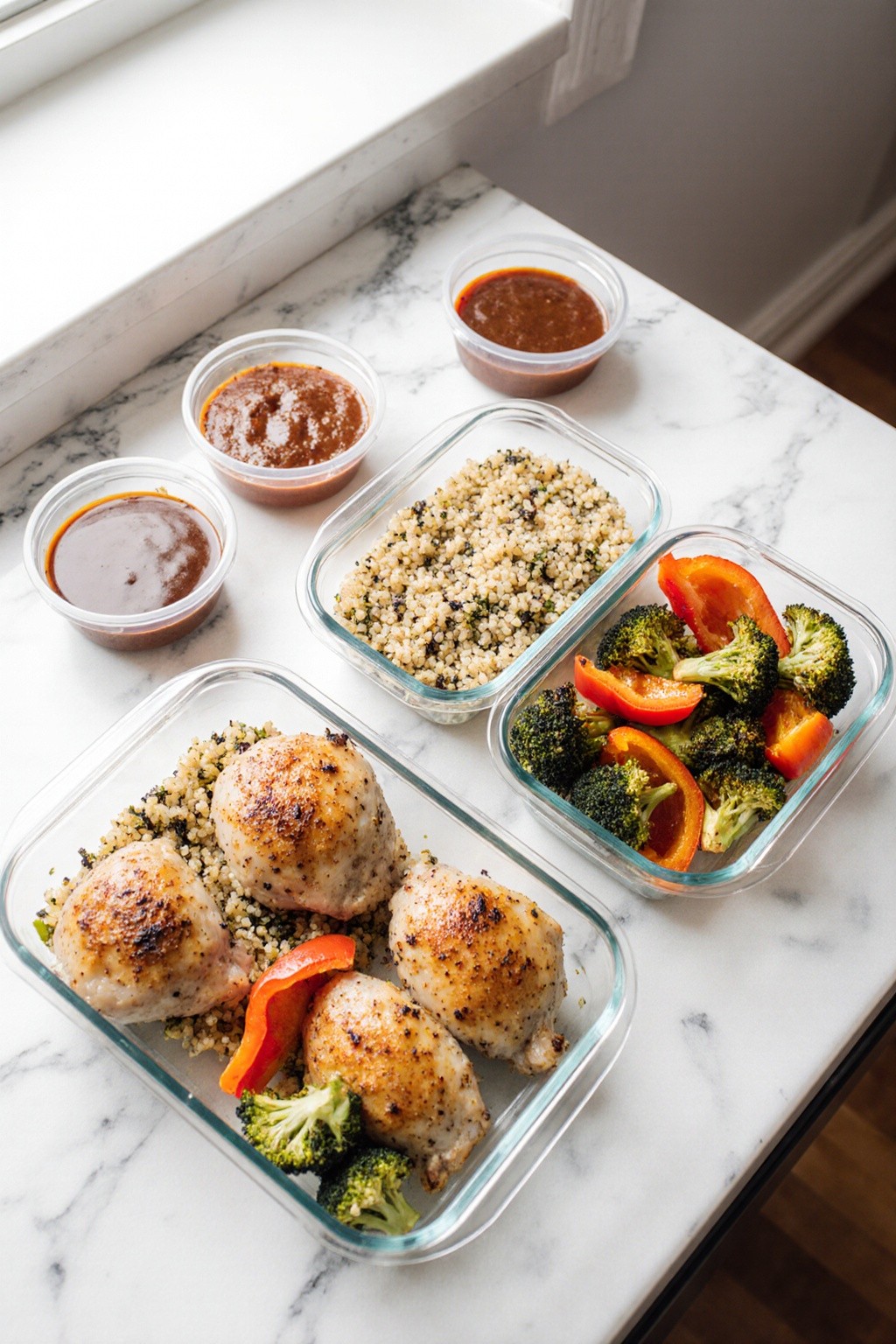
What’s Inside
- 1. Master the 333 Method for Good Meal Prep Ideas That Actually Work
- 2. Run Three Sheet Pans Simultaneously for Maximum Efficiency
- 3. Batch-Cook an Anchor Protein You Can Remix All Week
- 4. Cool Everything Before Packing to Avoid Soggy Disasters
- 5. Hit 30g Protein Per Container with Precise Portioning
- 6. Create Assembly Kits for Instant Meals
- 7. Add One Cup of Canned Beans Daily for Cheap, Healthy Protein
- 8. Stock Your Freezer with Green Smoothie Packs
- 9. Blend Bold Sauces on Sunday to Combat Bland Food
- 10. Fill 75% of Your Plate with Plants for Sustainable Eating
- 11. Freeze Half Your Batch for Effortless Future Prep
- 12. Add Fermented Foods for Gut Health Benefits
- 13. Parallel Cook for Maximum Time Efficiency
- 14. Rotate Seasonings Weekly on the Same Base Ingredients
- 15. Use Pre-Cut Produce Without Any Guilt
I wasted three hours last Sunday making bland chicken and mushy broccoli that nobody wanted to eat by Wednesday. Sound familiar? The truth is, good meal prep ideas aren’t about making boring food in bulk. They’re about smart systems that actually save time and taste amazing all week long. After years of trial and error (and way too many soggy containers), I’ve figured out what actually works.
The difference between meal prep that sticks and meal prep that fails usually comes down to a few key strategies. Most people overthink it or try to make restaurant-quality meals that don’t hold up. I’m going to show you 15 techniques that changed everything for me, from the 333 method that eliminated my decision fatigue to the cooling trick that stopped my lunches from turning into mush.
1. Master the 333 Method for Good Meal Prep Ideas That Actually Work

This method completely changed how I approach my Sunday prep sessions. Instead of buying random ingredients and hoping they work together, I pick exactly 3 proteins, 3 carbs, and 3 veggies every week. Right now I’m rotating 2 lbs chicken thighs ($6-8 at Costco), 1 block extra-firm tofu ($2.50), and 1 lb wild-caught salmon fillets ($12-15). For carbs: 1 lb quinoa, 2 cups dry brown rice, and 1 lb sweet potatoes. Veggies: broccoli, bell peppers, and Brussels sprouts.
The genius here is rotation without boredom. I’m not eating the same thing every day, but I’m also not cooking 15 different components. Colorado Nutrition Counseling experts recommend this approach because it gives you enough variety to stay interested while keeping your shopping list manageable. I personally mix and match throughout the week, so Monday might be salmon with quinoa and broccoli, while Wednesday is chicken thighs with sweet potatoes and peppers.
The key is choosing proteins and carbs with different cooking times and flavor profiles. Chicken thighs are forgiving and flavorful. Tofu takes on whatever seasoning you use. Salmon feels fancy even when it’s just baked with salt and lemon. This system has saved me from the “what should I make” paralysis that used to waste 30 minutes of my prep time.
2. Run Three Sheet Pans Simultaneously for Maximum Efficiency

Honestly, this technique cut my active cooking time in half. I heat my oven to 425°F and load up three sheet pans at once. First pan: chicken thighs with root vegetables tossed in olive oil. Second pan: Italian sausage with cabbage and baby potatoes. Third pan: cubed tofu with Brussels sprouts and sweet potato chunks. Everything goes in at the same time for about 30 minutes.
The result? I get 12-15 complete meals with only 30 minutes of hands-on work. Clean Eatzkitchen’s formula proved this works because everything cooks at similar temperatures and times when you cut vegetables to roughly the same size. I use parchment paper on each pan, which makes cleanup ridiculously easy. Just toss the paper and give the pans a quick rinse.
Pro tip: Don’t crowd your pans. I used to try cramming everything onto two pans to save space, but crowded vegetables steam instead of roast. They turn out soggy and bland. Give everything room to breathe and you’ll get those crispy, caramelized edges that make leftovers actually exciting. I can’t go back to cooking one thing at a time now. It feels wasteful.
3. Batch-Cook an Anchor Protein You Can Remix All Week

My anchor protein is always 3 lbs of chicken thighs seasoned simply with salt, pepper, and garlic powder. I roast them at 400°F for about 35 minutes until they hit 165°F internal temp. Then I let them cool and slice them up. This single batch becomes the foundation for completely different meals throughout the week.
Monday I’ll toss sliced chicken with mixed greens, cucumber, and balsamic vinaigrette for a salad. Tuesday it goes into whole wheat wraps with hummus and roasted red peppers. Wednesday I warm it up and serve it over brown rice with stir-fried vegetables and teriyaki sauce. Cosgrove Hill recommends this approach for gourmet kitchens because the plain seasoning works with any flavor profile you want to add later.
The mistake most people make is over-seasoning their anchor protein. If you make everything buffalo-flavored on Sunday, you’re stuck with buffalo-flavored meals all week. Keep it simple and neutral, then add bold sauces and seasonings when you assemble each meal. This flexibility is what keeps me from getting bored. I’ve used this same batch of plain chicken in Mediterranean bowls, Asian-inspired rice bowls, and Mexican-style burrito bowls in the same week.

HOMBERKING 10 Pack Borosilicate Glass Meal Prep Containers
Honestly, HOMBERKING 10 Pack Borosilicate Glass Meal Prep Containers with Lockin surprised me — sturdier than it looks in the photos, and over 23 buyers gave it 4.5 stars.
4. Cool Everything Before Packing to Avoid Soggy Disasters
I learned this lesson the hard way after throwing away three containers of what I call “swamp food.” Hot food goes into containers, creates condensation, and turns everything into a wet mess by day three. Now I spread everything out on sheet pans and let it cool for 15-20 minutes before I even think about portioning.
Clean Eatzkitchen’s guide specifically warns about this common mistake because it’s the number one reason people give up on meal prep. The condensation doesn’t just make food soggy, it also speeds up spoilage. I use a timer now so I don’t forget and let food sit out too long. Room temperature is fine for 20 minutes, but don’t push it past 30.
While everything cools, I get my containers ready and prep any fresh components like salad greens or sliced avocado that I’ll add fresh during the week. This cooling period isn’t wasted time. It’s when I portion sauces into small containers, chop fresh herbs for garnish, and clean up my cooking mess. By the time the food is cool enough to pack, my kitchen is already mostly clean and I’m ready to assemble everything quickly.
5. Hit 30g Protein Per Container with Precise Portioning

I bought a $15 digital food scale from Amazon two years ago and it changed everything about my meal prep. Now I actually know I’m getting enough protein instead of just guessing. For lunch containers, I aim for 30g protein minimum, which usually means 4 oz of baked salmon (about 28g) or 5 oz of turkey meatballs (around 32g).
Oregon State guidelines recommend this protein target because it keeps you full and supports muscle maintenance. When I was eyeballing portions, I’d get hungry by 2pm and raid the snack drawer. Now my lunches actually hold me over until dinner. The scale takes the guesswork out. I weigh my cooked protein, divide it into portions that hit my target, and know exactly what I’m getting.
This precision also means I can prep 5 days of high-protein meals in 90-120 minutes total on Sunday. I’m not remaking lunch every morning or buying expensive takeout because I didn’t pack enough food. The math is simple: 30g protein × 5 days = 150g protein needed for the week. If chicken breast has about 31g protein per 4 oz cooked, I need 20 oz total. Done. No more guessing, no more hunger, no more wasted time during the week.
6. Create Assembly Kits for Instant Meals

This is my secret weapon for nights when I’m too tired to cook but don’t want to order pizza again. I prep what I call assembly kits in large containers or bins in my fridge. For Mediterranean bowls, I cook 2 cups quinoa, roast 1 lb of bell peppers, drain 2 cans of chickpeas, dice 2 cucumbers, and portion out 1/2 cup of Kalamata olives. Everything goes in separate containers in one bin.
When dinner time comes, I literally just scoop from each container into a bowl, drizzle with lemon-tahini sauce (which I also prepped on Sunday), and I’m eating in 3 minutes. No cooking. No thinking. Cosgrove Hill features this technique because it removes the barrier between you and a healthy meal. The less friction, the more likely you’ll actually eat the food you prepped.
I rotate my assembly kits weekly. This week it’s Mediterranean. Next week might be a burrito bowl kit with cilantro-lime rice, black beans, roasted peppers and onions, corn, and salsa. The week after, maybe an Asian-inspired bowl with rice noodles, edamame, shredded carrots, and peanut sauce. The components stay good for 4-5 days, and I can mix and match them differently each night. My kids even like building their own bowls, which means less complaining at dinner.

VERONES 10 Pack 22 OZ Glass Meal Prep Containers
VERONES 10 Pack 22 OZ Glass Meal Prep Containers punches above its price — 18 buyers rated it 4.5 stars. I would buy it again.
7. Add One Cup of Canned Beans Daily for Cheap, Healthy Protein

I keep a stash of Goya black beans in my pantry because they’re incredibly cheap ($1-1.50 per 15-oz can at Target) and pack serious nutrition. One cup gives you about 15g protein and 15g fiber. Registered dietitian Kylie Sakaida recommends daily beans for reducing inflammation and cholesterol, and honestly, I notice a difference in how I feel.
I add them everywhere. Black beans in my breakfast scrambles. Chickpeas in my lunch salads. White beans mashed into a spread for wraps. They’re so versatile that I never get bored. The canned versions are just as nutritious as dried beans you cook yourself, and they save you hours of soaking and simmering. I drain and rinse them to reduce sodium, then portion them into my meal prep containers.
The fiber content is what really makes beans a meal prep superstar. They keep you full for hours, which means you’re not hunting for snacks an hour after lunch. For about $7-8 per week, I can add beans to almost every meal and dramatically increase my protein and fiber intake without much effort. They’re also shelf-stable, so I can stock up when they’re on sale. I’ve never understood why more people don’t use this incredibly cheap, healthy ingredient.
8. Stock Your Freezer with Green Smoothie Packs

Sunday mornings used to stress me out because I’d try to make a healthy breakfast while also prepping lunch and dinner. Now I spend 15 minutes making smoothie packs that last me two weeks. Each quart-sized Ziploc bag gets 2 cups fresh spinach, 1 cup frozen pineapple chunks, 1 sliced banana, and 2 tbsp chia seeds. The ingredients cost about $2-3 per pack.
In the morning, I dump one pack into my blender, add a cup of unsweetened almond milk and a scoop of protein powder, and blend for 30 seconds. Breakfast is done. Cosgrove Hill lists these as a trending convenience for 2026 because they remove all the morning decision-making. No measuring, no washing produce, no thinking.
I make 10-12 packs at once and stack them flat in my freezer so they take up minimal space. The spinach freezes perfectly and you can’t taste it once it’s blended with the pineapple. My kids call these “green monster smoothies” and actually request them, which feels like a parenting win. The chia seeds add omega-3s and help keep me full until lunch. This simple prep step means I actually eat breakfast instead of skipping it and being starving by 10am.
9. Blend Bold Sauces on Sunday to Combat Bland Food

The number one reason meal prep fails? Boring, bland food that nobody wants to eat. I spent years choking down plain chicken and steamed broccoli until I figured out that sauces are the real MVP. Now I blend 2-3 bold sauces every Sunday that completely transform my prepped ingredients.
My go-to yogurt-herb sauce uses 1 cup Fage 0% Greek yogurt, a handful of fresh dill, juice from one lemon, a minced garlic clove, and salt. It takes 2 minutes in the blender and lasts all week. My tahini dressing is even simpler: 1/4 cup tahini, 2 tbsp lemon juice, 2 tbsp water, and a pinch of salt. Colorado Nutrition experts specifically mention sauce prep as the fix for blandness because it adds huge flavor with minimal effort.
I portion sauces into small 2-oz containers so I can grab one each day. The yogurt sauce is perfect on grain bowls or as a dip for vegetables. The tahini dressing goes on salads or roasted vegetables. I also keep a bottle of Kikkoman teriyaki sauce ($3 at any grocery store) for quick stir-fry situations. These sauces mean I can eat the same base ingredients multiple times without feeling like I’m eating leftovers. The flavor profiles are different enough that Monday’s lunch tastes nothing like Wednesday’s, even though they’re built from the same components.

Skroam 10 Pack Glass Meal Prep Containers
Honestly, Skroam 10 Pack Glass Meal Prep Containers surprised me — sturdier than it looks in the photos, and over 56 buyers gave it 4.5 stars.
10. Fill 75% of Your Plate with Plants for Sustainable Eating

This ratio changed how I think about portioning my meal prep containers. Instead of making protein the star and adding vegetables as an afterthought, I flip it. My containers are 75% vegetables, whole grains, and beans, with 3-4 oz of quality protein like wild-caught salmon on the side. So a typical lunch is 1 cup roasted broccoli, 1/2 cup cooked farro, 1/2 cup lentils, and 3 oz salmon.
Canyon Ranch’s 2026 sustainable eating framework recommends this approach because it’s better for your health, your wallet, and the environment. Honestly, I was skeptical at first. I thought I’d be starving without a huge portion of meat. But the combination of fiber from vegetables and grains plus protein from beans and a smaller amount of fish keeps me satisfied for hours.
This ratio also means my grocery bill went down significantly. Quality salmon is expensive, but I only need 15-20 oz per week instead of 40 oz. I’m spending that saved money on better quality produce and interesting whole grains like farro, bulgur, and black rice. My energy levels are more stable throughout the day, and I’m not dealing with the afternoon crash I used to get from heavier, meat-focused meals. The visual is easy to remember too: three-quarters plants, one-quarter protein.
11. Freeze Half Your Batch for Effortless Future Prep

I started making double batches of my turkey and veggie meatballs specifically so I could freeze half for the following week. The recipe uses 2 lbs ground turkey, 2 cups shredded zucchini (which I do in my food processor), 1 cup oats, 2 eggs, and seasonings. Total cost is about $8-10 and I get roughly 30 meatballs.
I bake them all at once, let them cool, then freeze 15 in a gallon freezer bag. Two weeks later when I’m short on time or energy, I pull out that bag and I’ve already got a protein ready to go. Cosgrove Hill calls this the no-stress approach because you’re essentially doing meal prep for future you. It takes the same amount of effort to make 30 meatballs as it does to make 15, so why not?
This works for so many things. I double my soup recipes and freeze half. I make extra portions of casseroles and freeze individual servings. I even freeze cooked grains in 2-cup portions so I can pull them out and reheat them instead of cooking rice from scratch every week. The key is labeling everything with the date and contents. I use a Sharpie directly on freezer bags. Nothing worse than mystery freezer food that you’re afraid to eat because you don’t know how old it is.
12. Add Fermented Foods for Gut Health Benefits

I’ll be honest, I was skeptical about the whole gut health trend until I started adding fermented foods to my meal prep and noticed I felt less bloated. Now I keep a jar of Bubbies kimchi ($4-6 at Whole Foods) in my fridge and add about 1/4 cup to my lunch bowls. The tangy, spicy flavor completely changes a basic grain bowl.
Microbiome researcher Emily Leeming recommends fermented foods in your daily lunch for gut health, and dietitians are all over this advice for 2026. The live cultures in fermented foods like kimchi, sauerkraut, and plain yogurt support your digestive system. I’m not a scientist, but I know that since I started eating kimchi regularly, my digestion is noticeably better.
The beauty of fermented foods for meal prep is that they last forever in your fridge and add huge flavor. A spoonful of sauerkraut on a turkey sandwich makes it taste gourmet. Kimchi mixed into fried rice is incredible. Plain Greek yogurt with berries is my go-to breakfast. These aren’t separate dishes I need to prepare. They’re flavor-packed additions that take zero prep time and offer real health benefits. Just make sure you’re buying the refrigerated versions with live cultures, not the shelf-stable kinds that have been pasteurized.

Vtopmart 5Pack 22oz Glass Storage Containers with Lids
Vtopmart 5Pack 22oz Glass Storage Containers with Lids has been one of the most consistently praised picks in this category. 32 reviewers averaged 4.5/5.
13. Parallel Cook for Maximum Time Efficiency

This technique feels like a cooking superpower once you get the hang of it. While I’m roasting 2 lbs of chicken breasts in the oven at 400°F (25-30 minutes), I’m simultaneously cooking 2 cups of brown rice on the stovetop (20-25 minutes). During those same 25 minutes, I’m also chopping vegetables for salads and blending sauces in my food processor.
Clean Eatzkitchen’s routine proves that 60 minutes of parallel cooking yields about 12 complete meals. The trick is planning your timeline so everything finishes around the same time. I start the rice first since it takes longest. Then I get the chicken in the oven. While those are going, I prep everything else. When the timer goes off, I have multiple components done at once.
Common mistake: trying to do too many things at once when you’re first learning this method. Start with two parallel tasks, like oven + stovetop. Once that feels comfortable, add in the prep work. I used to stress myself out trying to do everything simultaneously and I’d burn something or forget a step. Now I have a written timeline on a sticky note on my fridge for my usual Sunday routine. It sounds nerdy, but it works. I’m not wasting time or mental energy figuring out what to do next.
14. Rotate Seasonings Weekly on the Same Base Ingredients

This is how I use the 333 method without getting bored. I buy the same proteins, carbs, and veggies for 3-4 weeks in a row, but I completely change the seasonings each week. Week one, my tofu gets teriyaki sauce (Kikkoman bottle is $3 and lasts forever). Week two, the same tofu gets tossed in a chimichurri I blend with parsley, garlic, olive oil, and red wine vinegar. Week three, I go Indian-inspired with curry powder and coconut milk.
Colorado Nutrition experts recommend this rotation for sustained adherence because you’re getting variety without the complexity of learning new recipes or buying different ingredients every week. My grocery shopping is faster because I’m buying mostly the same items. My prep is faster because I know how to cook these ingredients. The only thing that changes is the flavor profile.
I keep a running list on my phone of seasoning combinations that worked well so I can repeat them. Right now my favorites are: lemon-herb (lemon juice, oregano, garlic), Asian-inspired (soy sauce, ginger, sesame oil), Mexican (cumin, chili powder, lime), and Mediterranean (olive oil, za’atar, lemon). Each one transforms the same chicken thighs or roasted vegetables into something that feels completely different. This strategy is the reason I’ve stuck with meal prep for three years instead of giving up after two weeks like I used to.
15. Use Pre-Cut Produce Without Any Guilt

I’m going to say something controversial: pre-cut produce is worth every penny. Yes, it costs more. A 1 lb container of Earthbound Farm pre-washed kale is $4-5 compared to $2 for a whole bunch you wash and chop yourself. But you know what’s more expensive? Throwing away a whole bunch of kale that rotted in your crisper drawer because you never got around to prepping it.
Canyon Ranch experts specifically emphasize convenience for real schedules in 2026, and I’m living proof this works. I buy Trader Joe’s frozen edamame, pre-riced cauliflower, pre-cut butternut squash, and bags of pre-washed salad greens. These items mean I can throw together a complete meal in 15 minutes on nights when I’m exhausted. Without them, I’d order takeout.
The nutrition is virtually identical to whole produce you cut yourself. You’re paying for the labor, not lower quality. And if paying an extra $2-3 per item means you actually eat vegetables instead of letting them rot, that’s a smart investment. I used to feel guilty about this until I calculated how much produce I was wasting. Now I strategically buy pre-cut items for ingredients I historically don’t prep, and I buy whole produce for things I know I’ll use. My meal prep is faster, I waste less food, and I eat more vegetables. That’s a win in every category that matters.
These 15 good meal prep ideas have genuinely transformed my Sunday routine from a stressful marathon into a manageable system that sets me up for success all week. The key is finding the techniques that work for your schedule, your budget, and your taste preferences. Start with 2-3 of these strategies and build from there. You don’t need to do everything at once.
I’d love to hear which of these ideas you try first. Save this article or pin it so you can reference it during your next prep session. Once you find your rhythm, meal prep stops feeling like a chore and starts feeling like the gift of time and sanity during your busy week.
![[10-Pack] Glass Meal Prep Containers with Lids](https://m.media-amazon.com/images/I/71VKuXwIKOL._AC_UL320_.jpg)
[10-Pack] Glass Meal Prep Containers with Lids
A dependable everyday pick — [10-Pack] Glass Meal Prep Containers with Lids pulls in 146 ratings at 4.5 stars. Not flashy, just solid.
Frequently Asked Questions
How long does meal prepped food stay fresh in the fridge?
Most meal prepped foods stay fresh for 4-5 days when stored properly in airtight containers. Cooked proteins like chicken and fish are best consumed within 3-4 days. Always cool food completely before sealing containers to prevent condensation and spoilage.
What’s the best way to prevent meal prep from getting boring?
Rotate your seasonings weekly while using the same base ingredients. Prep 2-3 different sauces each week and use the 333 method (3 proteins, 3 carbs, 3 veggies) to create variety. This gives you different flavor combinations without complicated new recipes.
How much protein should I include in each meal prep container?
Aim for 30g of protein per lunch container for optimal satiety. This typically equals 4 oz of cooked salmon, 5 oz of turkey meatballs, or 4-5 oz of chicken breast. Use a digital food scale for accurate portioning.
Can I freeze meal prepped food for later use?
Yes! Many meal prep items freeze well, including cooked grains, meatballs, soups, and casseroles. Always label with date and contents. Make double batches and freeze half for future weeks when you’re short on time or energy.
1 thought on “15 Brilliant Good Meal Prep Ideas That Changed Everything”